
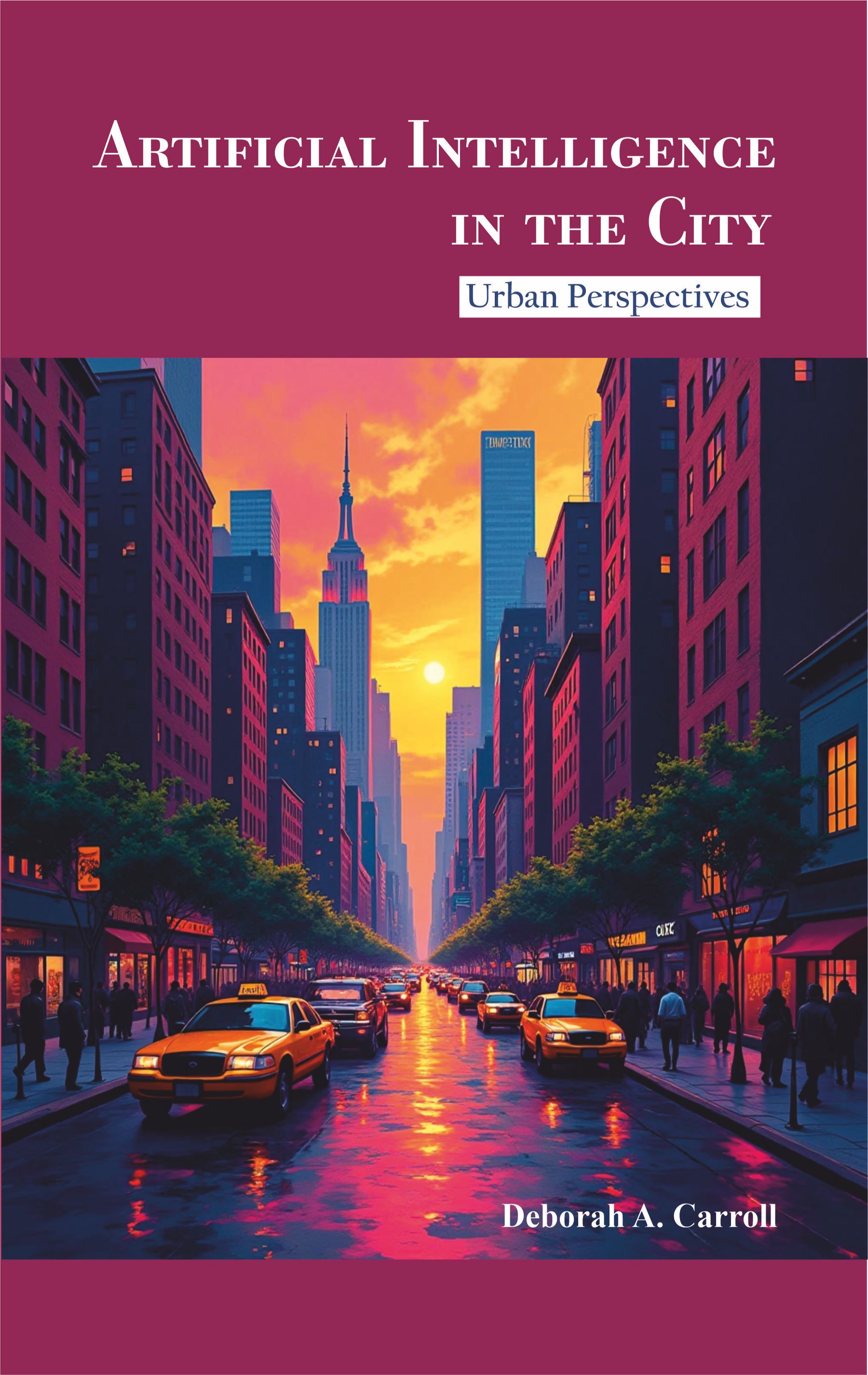
Artificial Intelligence (AI) in urban perspectives involves applying AI technologies to improve city life through applications in urban infrastructure, sustainability, governance, and services. From optimizing traffic and managing public transit to enhancing citizen communication via chatbots and managing waste, AI helps cities become more efficient, sustainable, and livable. Urban AI is evolving the smart city concept by fundamentally changing how cities are designed and managed, often in collaboration with human planners. With the rapid rise of artificial intelligence, a new wave of integration between AI technologies and the urban intelligence process has emerged. This marks the latest and highest peak in the 8000-year history of urban construction, while also posing significant challenges and risks. Therefore, the concept of the "Artificial Intelligence City" (AI City) must first establish clear goals, ensure that technology serves a greater good, and remain true to its original purpose: using technology to enhance the quality of urban life rather than exacerbating inequality and opacity.
Deborah A. Carroll joined UIC in 2021 as Associate Professor in the Department of Public Administration and Director of the Government Finance Research Center in the College of Urban Planning and Public Affairs. Dr. Carroll's research focuses on financial management and fiscal policy issues of state and local governments, particularly related to taxation, revenue diversification, revenue stability, and urban economic development, as well as on the interconnectedness of the government and nonprofit sectors and the implications for tax policy, tax burden, and public service provision. On these topics, Dr. Carroll has produced more than 65 scholarly publications, most of which are co-authored with graduate students and junior faculty, and 20 grant-funded white papers and technical reports totaling more than $1.3 million. She has been invited to share her research and expertise with academic and practitioner audiences across the U.S. and in several other counties. Dr. Carroll serves as Editor-in-Chief of the Journal of Public and Nonprofit Affairs, which focuses on providing a connection between the practice and research of public affairs, and is a collaborating scholar with the University of Illinois System's Institute of Government and Public Affairs. In other service to the profession, Dr. Carroll has served on the governing boards of the Southeastern Conference for Public Administration (2011-2013) and Association for Budgeting and Financial Management (2006-2008), as editorial board member of the Journal of Public Budgeting, Accounting, and Financial Management (2020-Present) and Urban Affairs Review (2009-2011), as Associate Editor of Public Administration Review (2015-2017), and as Treasurer of the Association for Budgeting and Financial Management (2013-2018). Dr. Carroll began her career in public service as a budget and policy analyst for the City of Milwaukee, Wisconsin while pursuing her Master of Public Administration degree from the University of Wisconsin-Milwaukee. With a passion for applied research intended to inform public policy and improve public sector management, Dr. Carroll pursued her Ph.D. in Political Science from the University of Wisconsin-Milwaukee, which she completed in 2004 along with a Graduate Certificate in State and Local Taxation from the UWM Sheldon B. Lubar School of Business. Her dissertation examined the extent to which Milwaukee's tax increment financing program influenced the investment decisions of private development firms and the extent to which capital improvements made within TIF districts were capitalized into business property values. Dr. Carroll has also served on the faculties of the University of Tennessee-Knoxville (2004-2006), University of Georgia (2006-2016), and University of Central Florida (2016-2021) where she also served as Director of the Center for Public and Nonprofit Management.
| Preface Chapter 1 The Development of the Smart City 1.1 THE CONCEPT OF THE SMART CITY 1.2 THE DEVELOPMENT AND PREDICAMENT OF SMART CITIES IN THE WORLD 1.3 URBAN INTELLECTUALIZATION UNDER EMERGING TECHNOLOGIES Chapter 2 Beyond Smart City: The AI City is Coming 2.1 THE INTRODUCTION OF NEW GENERATION AI TECHNOLOGY 2.2 THE DEFINITION OF THE "AI CITY" 2.3 THE DEVELOPMENT AND PREDICAMENT OF SMART CITIES IN THE WORLD 2.4 THE ESSENCE OF THE AI CITY 2.5 THE MULTI-BRAIN SCHEME OF AI CITIES Chapter 3 The Prototype of the AI City 3.1 THE STRUCTURAL EVOLUTION OF URBAN INTELLIGENCE 3.2 THE IMPACT OF SEVEN WAVES OF URBAN TECHNOLOGY 3.3 FUTURE URBAN CHANGES TRIGGERED BY AI TECHNOLOGY 3.4 THE AI CITY PROTOTYPE 3.5 THE PLANNING AND GOVERNANCE OF THE AI CITY Chapter 4 The Determinants of the AI City 4.1 AI CITY DETERMINANT 1: LEARNING ABILITY 4.2 AI CITY DETERMINANT 2: DISCOVERING LAWS THROUGH LEARNING 4.3 AI CITY DETERMINANT 3: PREDICTING THE FUTURE 4.4 AI CITY DETERMINANT 4: INTELLIGENT SELF-ORGANIZATION APPLICATIONS 4.5 AI CITY DETERMINANT 5: DEMAND-DRIVEN TECHNOLOGY DEVELOPMENT Chapter 5 The Main Goal of the AI City 5.1 THE GENERATION OF HUMAN NEED 5.2 THE DIVERSITY OF HUMAN NEEDS 5.3 MEETING HUMAN NEEDS IS THE ESSENCE OF URBAN INTELLIGENCE Chapter 6 Matching Between New Generation AI Technologies and Urban Demands 6.1 THE MATRIX OF AI TECHNOLOGIES AND CITY NEEDS 6.2 THE CITY APPLICATIONS OF BIG DATA INTELLIGENCE 6.3 THE CITY APPLICATIONS OF SWARM INTELLIGENCE 6.4 THE CITY APPLICATIONS OF CROSS-MEDIA INTELLIGENCE 6.5 THE CITY APPLICATIONS OF HYBRID ENHANCED INTELLIGENCE 6.6 THE CITY APPLICATIONS OF INTELLIGENT UNMANNED SYSTEMS Chapter 7 Frontier Application of New Generation AI Technology 93 7.1 INTELLIGENT FABRICATION 7.2 INTELLIGENT AGRICULTURE 7.3 INTELLIGENT HEALTHCARE 7.4 INTELLIGENT EDUCATION Chapter 8 The Technical Framework of AI Cities 8.1 DATA SENSING PLATFORM AND DATABASE 8.2 INTELLIGENT FEEDBACK 8.3 DECISION-MAKING TECHNOLOGY 8.4 THE SYSTEM OF APPLICATION SCENARIOS Chapter 9 Case Study: Qingdao Sino-German Future-Park 9.1 CONSTRUCTION OF THE AI CITY PIVOT IN THE QINGDAO SINO-GERMAN FUTURE CITY 9.2 RATIONAL ALLOCATION OF ENERGY AND WATER RESOURCES 9.3 THE CIM PLATFORM OF THE QINGDAO SINO-GERMAN FUTURE CITY 9.4 THE SYSTEMATIC STRUCTURE OF THE CIM PLATFORM OF THE QINGDAO SINO-GERMAN FUTURE CITY 9.5 THE ENVIRONMENT DEVELOPMENT OF THE AI CITY PIVOT OF THE QINGDAO SINO-GERMAN FUTURE CITY |
|

$280.00