
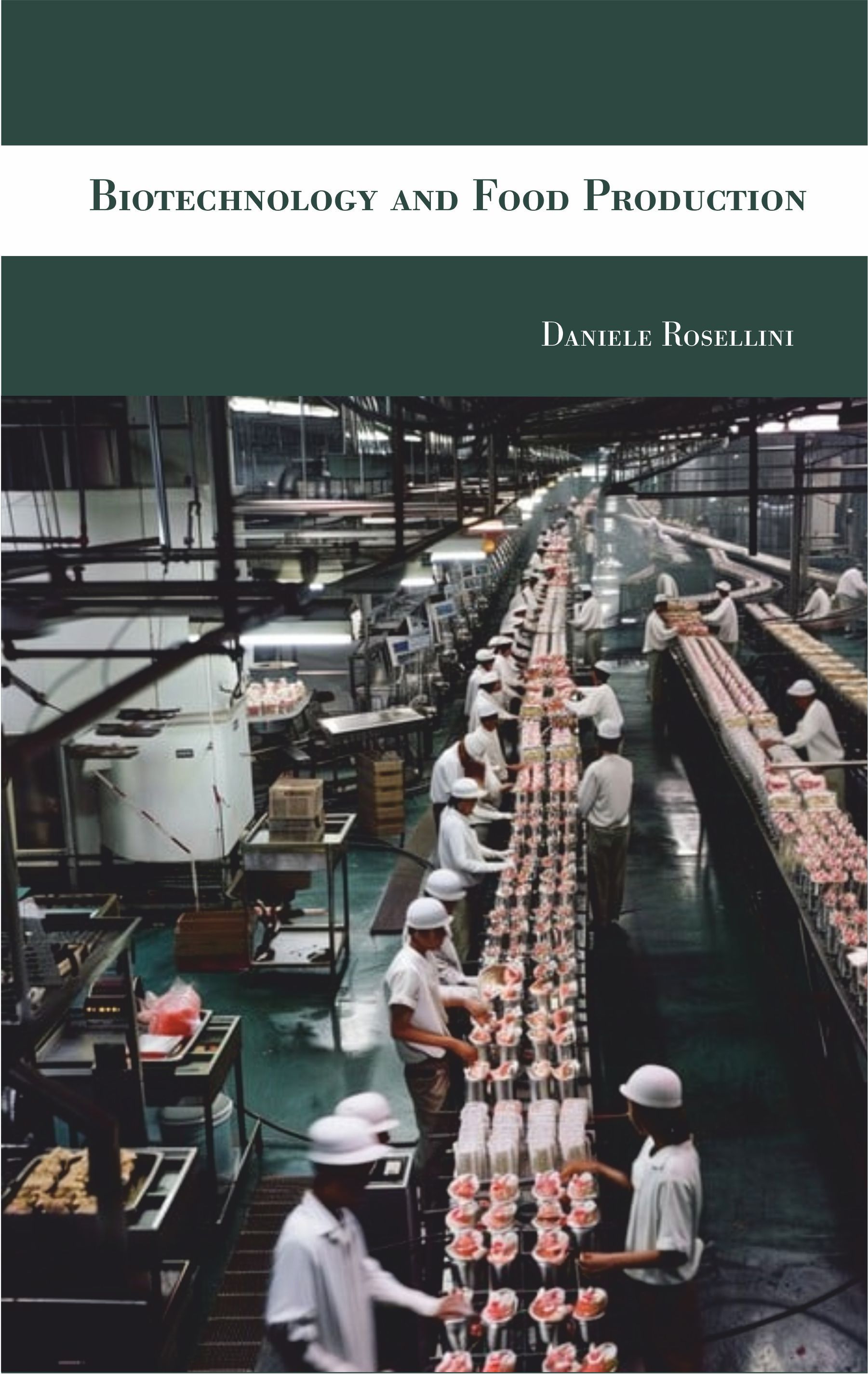
Biotechnology plays a significant role in modern food production, offering solutions for enhanced crop yields, improved nutritional value, and increased food safety and shelf life. It encompasses the use of microorganisms, genetic engineering, and other biotechnological tools to modify food and agricultural processes. Genetically modified (GM) crops, like But cotton, are engineered to be resistant to specific pests, reducing the need for chemical pesticides. Golden Rice, a GM variety, is enriched with beta-carotene, addressing vitamin A deficiency. Biotechnology can help develop crops that are more resistant to drought, salinity, and other environmental stressors, leading to higher and more stable yields. Biotechnology is used to modify fruit ripening processes, enhancing sweetness and shelf life, as seen in GM tomatoes. The application of biotechnology in the food sciences has led to an increase in food production, and enhanced the quality and safety of food. Food biotechnology is a dynamic field, and the continual progress and advances have not only dealt effectively with issues related to food security but also augmented the nutritional and health aspects of food. Food biotechnology's typical developments and applications have occurred in the fields of genetics and in enzyme and cell-based biological processes, with the goal of producing and improving food ingredients and foods themselves. Biotechnology and Food Production provides an instructive and comprehensive overview of the use of biotechnology in agriculture and food production, how biotechnology can improve the quality and productivity of agriculture and food products. It includes current topics such as GM foods, enzymes, and production of various types of food ingredients as well as basic ones such as the concept of biotechnology, plant cell, and tissue culture. Combining coverage of agriculture and food processing, the book highlights the range of biotechnology applications from farm to fork. Special attention has focused on plant biotechnology during the last decade because transgenic plants can offer an increase in crop yield and are very economical sources of proteins and other products for industrial, pharmaceutical, veterinary and agricultural use. The content of this book covers many aspects of food biotechnology and presents the main trends and interdisciplinary information in this area.
Daniele Rosellini is the Associate Professor, Department of Agricultural, Food and Environmental Sciences, University of Perugia, Italy. He completed Master Degree in 1986, from Agricultural Sciences, University of Perugia, Italy, Ph.D: in1989, Crop Productivity: Breeding alfalfa for seed yield, University of Perugia, Italy. He also worked as a visiting scientist in 1996-97 in University of Wiscosin-Madison, USA and University of Georgia-Athens, USA in 2000-2001. His professional experiences are Research Scientist, Institute for Industrial Crops, Ministry of Agriculture and Forestry, Bologna, Italy; Research Scientist, Dept. of Plant Biology and Agro-environmental Biotechnology, University of Perugia, Italy. He is the member of Italian Society of Agricultural Genetics (Member of the Board, 2008-2009); European Association for Research on Plant Breeding (Eucarpia); Member of the Board of the Eucarpia Fodder Crops and Amenity Grasses Section, 2004-2011; Society for In vitro Biology (2001-2014); and Secretary of the International Herbage Seed Group, 1997-2000. His main scientific interests include Alfalfa Genetics, Breeding, Biotechnology, and Reproduction biology.
| Preface 1. BIOTECHNOLOGY AND ITS ROLE IN AGRICULTURE AND FOOD PROCESSING 1.1 . Concept of Biotechnology 1.2 . Historical Developments 1.3 . Interdisciplinary Nature of Biotechnology 1.4 . Biotechnology in Agriculture 1.5 . Biotechnology in Food Processing 1.6 . Impact of Genomics on Agriculture and Food Processing 1.7 . Summary and Future Prospects 2. GENOMICS ERA FOR PLANTS AND CROP SPECIES – ADVANCES MADE AND NEEDED TASKS AHEAD 2.1. . Introduction 2.2. . Genome of plants and crop species 2.3. . Sequenced plant genomes 2.4. . Sequencing “1001 genotypes” and “1000 plant species” 2.5. . Crop improvement in the genomics and post-genomics era 2.6. . Grand tasks ahead 2.7 . Conclusions 3. RECENT DEVELOPMENTS IN FOOD BIOTECHNOLOGY 3.1 . Introduction 3.2 . Modern Biotechnological Approaches to Traditional Processes Phage Resistance 3.3 . Agricultural Biotechnology 3.4 . Transformation Techniques in Plant Biotechnology 3.5 . Conclusion 4. BIOPROCESS DESIGN 4.1 . Introduction 4.2 . Food Biotechnology Products 4.3 . Design Generalities 4.4 . Product/Process Development Chain 4.5 . Economic Analysis 4.6 . Single Cell Production: An Example of Bioprocess Design 4.7 . Conclusions 5. GAS HOLD-UP STRUCTURE IN IMPELLER AGITATED AEROBIC BIOREACTORS 5.1 . Introduction 5.2 . Gas Hold-Up Structure in Viscous Liquids 5.3 . Effect of Tiny Bubbles on Mass Transfer 5.4 . Experimental Observations on Gas Hold-Up in Impeller Agitated Systems 5.5 . Conclusions 6. PROTEIN CRYSTALLOGRAPHY IMPACT ON BIOTECHNOLOGY 6.1 . Introduction 6.2 . Fundamentals of Diffraction 6.3 . Impact on Biotechnology 7. IMPROVING BIOGENERATION OF AROMA COMPOUNDS BY IN SITU PRODUCT REMOVAL 7.1 . Introduction 7.2 . Downstream Processes for Aroma Compounds 7.3 . In Situ Product Removal of Aroma Compounds 7.4 . Conclusion 8. LUPINES: AN ALTERNATIVE FOR DEBITTERING AND UTILIZATION IN FOODS 8.1 . Introduction 8.2 . Chemical Composition of Lupinus campestris 8.3 . Debittering of Seeds 8.4 . Total Carbohydrates and Oligosaccharides 8.5 . Quinolizidine Alkaloids 8.6 . Tannins 8.7 . Lupine Milk Elaboration 8.8 . Fermentation Profiles 8.9 . Amino Acid Compositio |
|

$280.00