
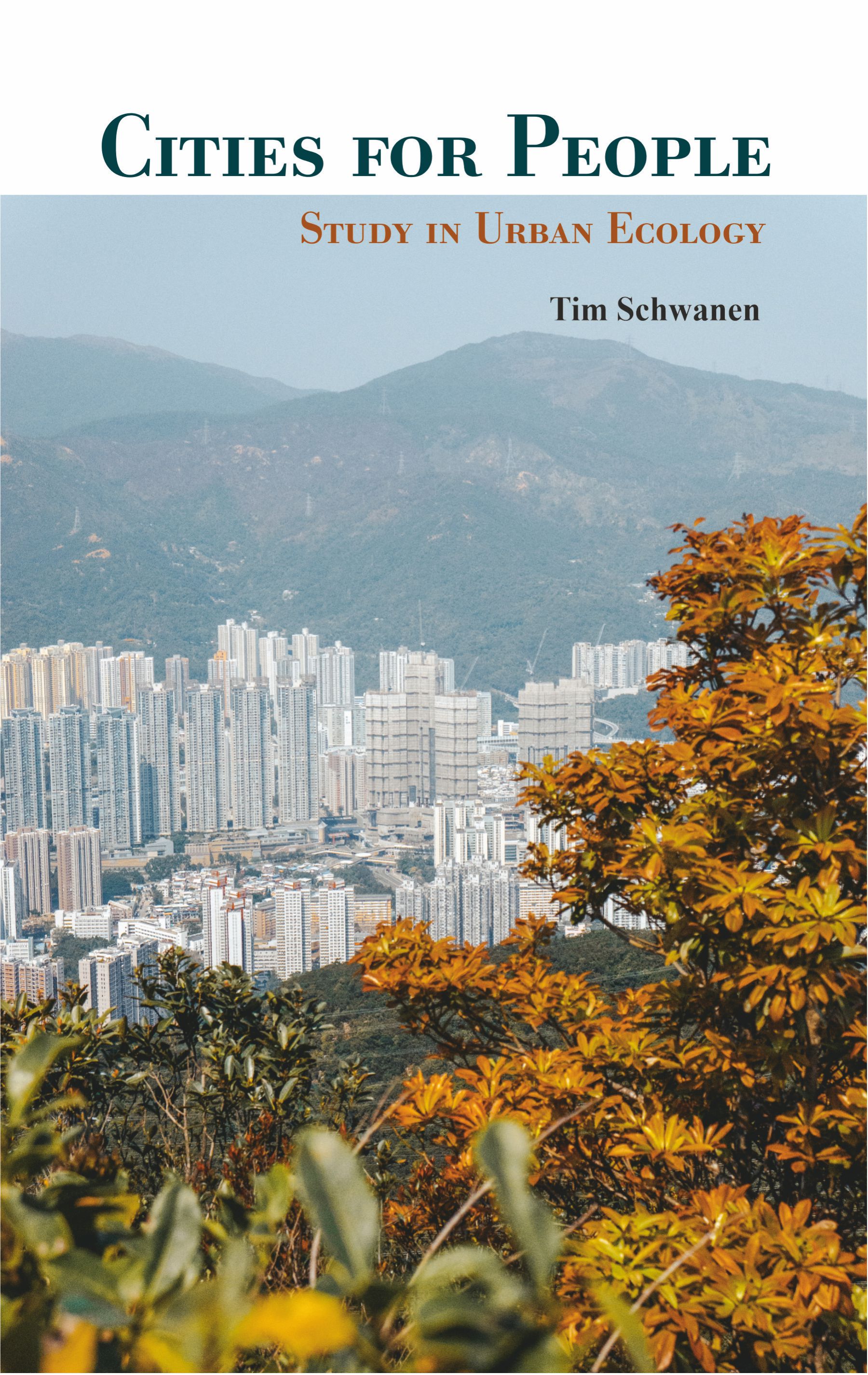
This book is intended to provide a broad overview of the field of urban ecology, particularly for those wanting to find out what it is essentially about, either as part of their general ecological education or perhaps with a view to begin working in this area. Some of the chapter topics could be equally relevant to almost any ecosystem (although the chapter contents would vary), others particularly reflect the intimate links between people and ecological pattern and process in urban areas. The book opens with chapters addressing what urban ecology is and some of the essentials of the urbanisation process and of ecosystem function in urban areas. It moves on to consider how individual species, species richness and alien species respond to urbanisation. The next chapters tackle various facets of human-ecology interactions in urban environments, respectively those between people and wildlife, between human social organisation and ecology, and between human health and wellbeing and ecology. Two chapters then follow that focus on urban green spaces and urban planning. The book concludes with consideration of the future of urban systems and urban ecology. This book covers the key environmental issues of urban ecosystems as well as the human-centric issues, particularly those of governance, economics, sociology and human health. The goal is to challenge readers' thinking around urban ecology from a resource-based approach to a holistic and applied field for sustainable development. The major themes of the book: emerging urban concepts and urbanization, land use/land cover change, urban social ecological systems, urban environment, urban material balance, smart, healthy and sustainable cities and sustainable urban design. Within each section, key concepts such as monitoring the urbanization phenomena, land use cover, urban soil fluxes, urban metabolism, pollution and human health and sustainable cities are covered. This book serves as a comprehensive and advanced book for students, researchers, practitioners and policymakers in urban ecology and urban environmental research, planning and practice.
Tim Schwanen is Director of the Transport Studies Unit, Professor of Transport Geography in the School of Geography and the Environment, and also a Supernumerary Fellow at St Anne's College. He joined the Transport Studies Unit (TSU) in March 2009 and became Director in September 2015. Tim is one of the editors of Environment and Planning F: Philosophy, Theory, Models, Methods and Practice, the youngest addition to the E&P family, and he serves on the editorial advisory boards of five journals focused on transport and mobility. Since September 2021 he has been a Fellow of the Academy for Social Sciences, the UK's national academy for academics, learned societies and practitioners in the social sciences. Tim obtained his PhD from the Department of Human Geography and Planning of Utrecht University, The Netherlands in 2003 (cum laude), after which he worked as a post-doctoral researcher and Lecturer in Urban Geography at the same university. Tim joined the University of Oxford in March 2009, first as a Research Fellow at the TSU and later as Departmental Lecturer in Transport Studies and Human Geography. He has fulfilled the TSU Director role since September 2015 and was the Fellow in Geography at St Anne's College in 2015-2021. Tim was a Visiting Professor in Human Geography at the School of Business, Economics and Law of the University of Gothenburg in 2016-2019, and held a Francqui Chair at the Faculty of Sciences in Ghent University in 2022. Tim is a member of the SoGE Technological Life: Environments, Bodies, Mobilities research cluster.
| Preface Chapter 1 Urban Ecology WHAT IS URBAN ECOLOGY? THE RISE OF URBAN ECOLOGY ECOLOGY IN AND OF URBAN AREAS ‘WICKED’ PROBLEMS PROSPECTS Chapter 2 Urbanisation WHAT IS URBAN? HOW DOES URBANISATION OCCUR? A BRIEF HISTORY OF URBANISATION THE SCALE OF URBANISATION THE STRUCTURE OF URBAN AREAS Chapter 3 Urban Environments and Ecosystem Functions TEMPERATURE WATER QUALITY WATER FLOWS CARBON CYCLES ATMOSPHERIC CHEMISTRY SPECIES INTERACTIONS IN CONCLUSION Chapter 4 Individual Species and Urbanisation SPECIES TRAITS DEMOGRAPHIC TRAITS POPULATION GENETIC STRUCTURE SYNTHESIS AND DIRECTIONS FOR FUTURE RESEARCH Chapter 5 Species Diversity and Urbanisation: Patterns, Drivers and Implications PATTERNS IN SPACE PATTERNS IN TIME IMPLICATIONS AND FUTURE RESEARCH Chapter 6 Urbanisation and Alien Invasion INTRODUCTION ECOLOGICAL CHARACTERISTICS OF URBANISATION AND THEIR IMPORTANCE FOR INVASION TYPICAL URBAN SPECIES: NATIVES AND ALIENS IMMIGRATION PATHWAYS AND URBANISATION CITIES AS SOURCES OF INVASIONS ALIEN SPECIES AND BIOTIC HOMOGENISATION IN URBAN REGIONS SUMMARY Chapter 7 Interactions between People and Nature in Urban Environments WHAT ARE PEOPLE–NATURE INTERACTIONS? VISITING URBAN GREEN SPACES FEEDING URBAN WILDLIFE PEOPLE–NATURE INTERACTIONS: COMMON THREADS Chapter 8 Urban Ecology and Human Social Organisation INTRODUCTION THE SOCIAL ORGANISATION OF CITIES TEMPORAL DYNAMICS GLOBAL CONTEXT LINKING SOCIAL ORGANISATION AND ECOLOGICAL OUTCOMES DIFFERENTIATION BY LAND USE SOCIAL STRATIFICATION AND ECOLOGICAL OUTCOMES OTHER SOCIAL DYNAMICS ECOLOGICAL OUTCOMES FROM HOUSEHOLD DECISIONS SYNTHESIS AND DIRECTIONS FOR FUTURE RESEARCH |
|

$280.00