
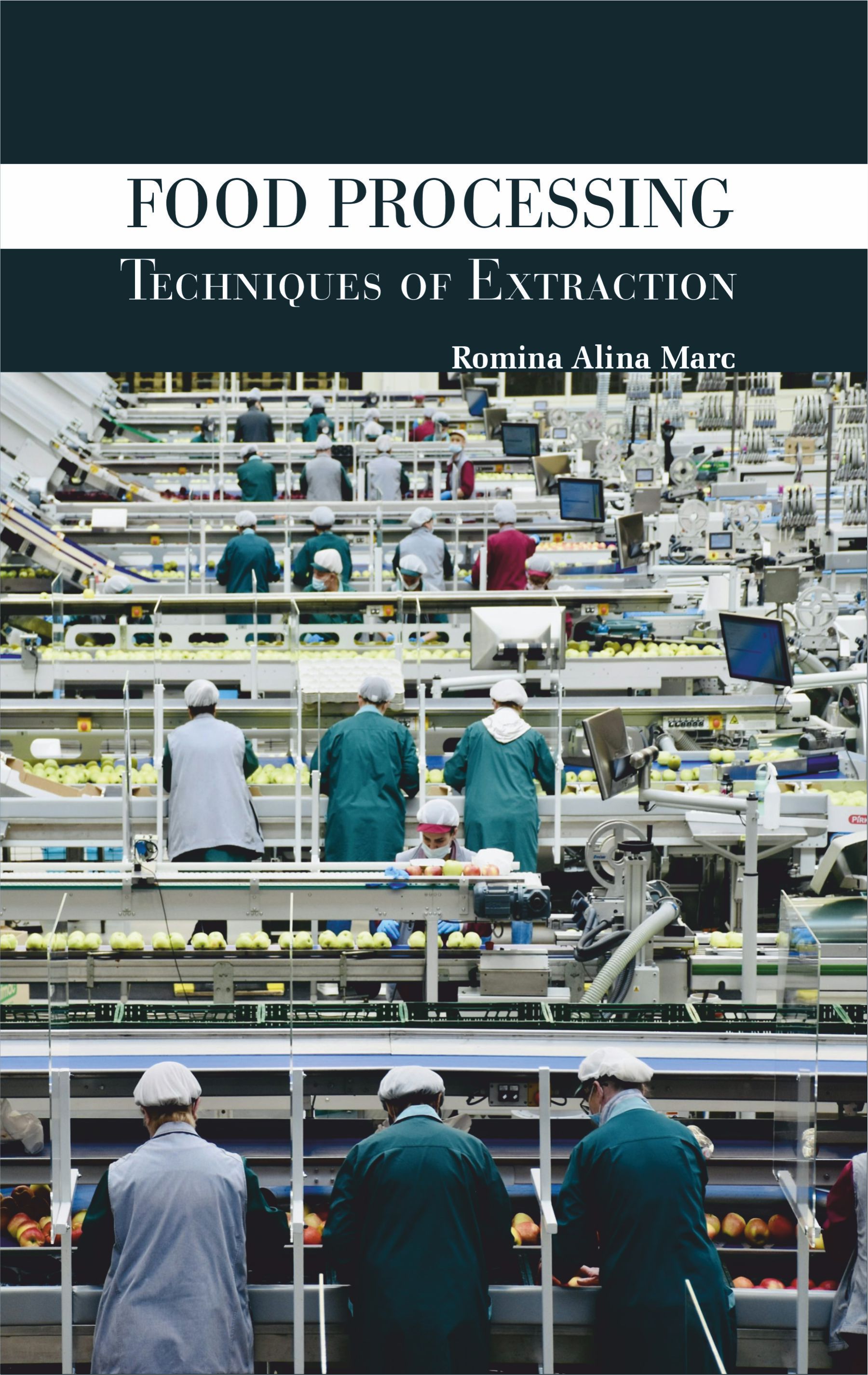
Food engineering is the multidisciplinary field of applied physical sciences combined with the knowledge of product properties. Food engineers provide the technological knowledge transfer essential to the cost-effective production and commercialization of food products and services. In particular, food engineers develop and design processes and equipment in order to convert raw agricultural materials and ingredients into safe, convenient, and nutritious consumer food products. However, food engineering topics are continuously undergoing changes to meet diverse consumer demands, and the subject is being rapidly developed to reflect market needs. In the development of food engineering, one of the many challenges is to employ modern tools and knowledge, such as computational materials science and nanotechnology, to develop new products and processes. Simultaneously, improving quality, safety, and security remains a critical issue in the study of food engineering. New packaging materials and techniques are being developed to provide more protection to foods, and novel preservation technologies are emerging to enhance food security and defense. Additionally, process control and automation regularly appear among the top priorities identified in food engineering. Advanced monitoring and control systems are developed to facilitate automation and flexible food manufacturing. Furthermore, energy savings and minimization of environmental problems continue to be important issues in food engineering, and significant progress is being made in waste management, efficient utilization of energy, and reduction of effluents and emissions in food production. Extraction has been used probably since the discovery of fire. Egyptians and Phoenicians, Jews and Arabs, Indians and Chinese, Greeks and Romans, and even Mayans and Aztecs all utilized innovative extraction and distillation for processing of perfumes or food. Nowadays, we cannot find a production line in the food industry that does not use extraction processes (e.g., maceration, solvent extraction, steam distillation or hydrodistillation, cold pressing, squeezing, etc.).
Romina Alina Marc, University of Agricultural Sciences and Veterinary Medicine of Cluj-Napoca Romina Alina Marc completed her doctorate (agronomy) in 2015 at the University of Agricultural Sciences and Veterinary Medicine (UASVM) in Cluj-Napoca (Romania). She is Dr. Eng. Habil., a university lecturer responsible for the research activity in plant food quality control, rheology in the food industry, quality management systems, and food safety at the Faculty of Food Science and Technology, USAVM Cluj-Napoca. She has published more than 110 research articles on plant science, innovative food product development, food safety, and traceability of bioactive compounds during processing in reputed journals, more than 50 conferences, three scientific books, nine chapters in international books, three didactic books, five books published by international publishers, and 37 projects.
Preface 1. PROPERTIES OF FOODS AND PROCESSING THEORY 2. PROCESS CONTROL 3. RAW MATERIAL PREPARATION 4. SIZE REDUCTION 5. MIXING AND FORMING 6. SEPARATION AND CONCENTRATION OF FOOD COMPONENTS 7. FERMENTATION AND ENZYME TECHNOLOGY 8. IRRADIATION 9. PROCESSING USING ELECTRIC FIELDS, HIGH HYDRO-STATIC PRESSURE, LIGHT OR ULTRASOUND 10. BLANCHING 11. PASTEURISATION 12. HEAT STERILISATION 13. EVAPORATION AND DISTILLATION 14. EXTRACTION Bibliography Index

$280.00