
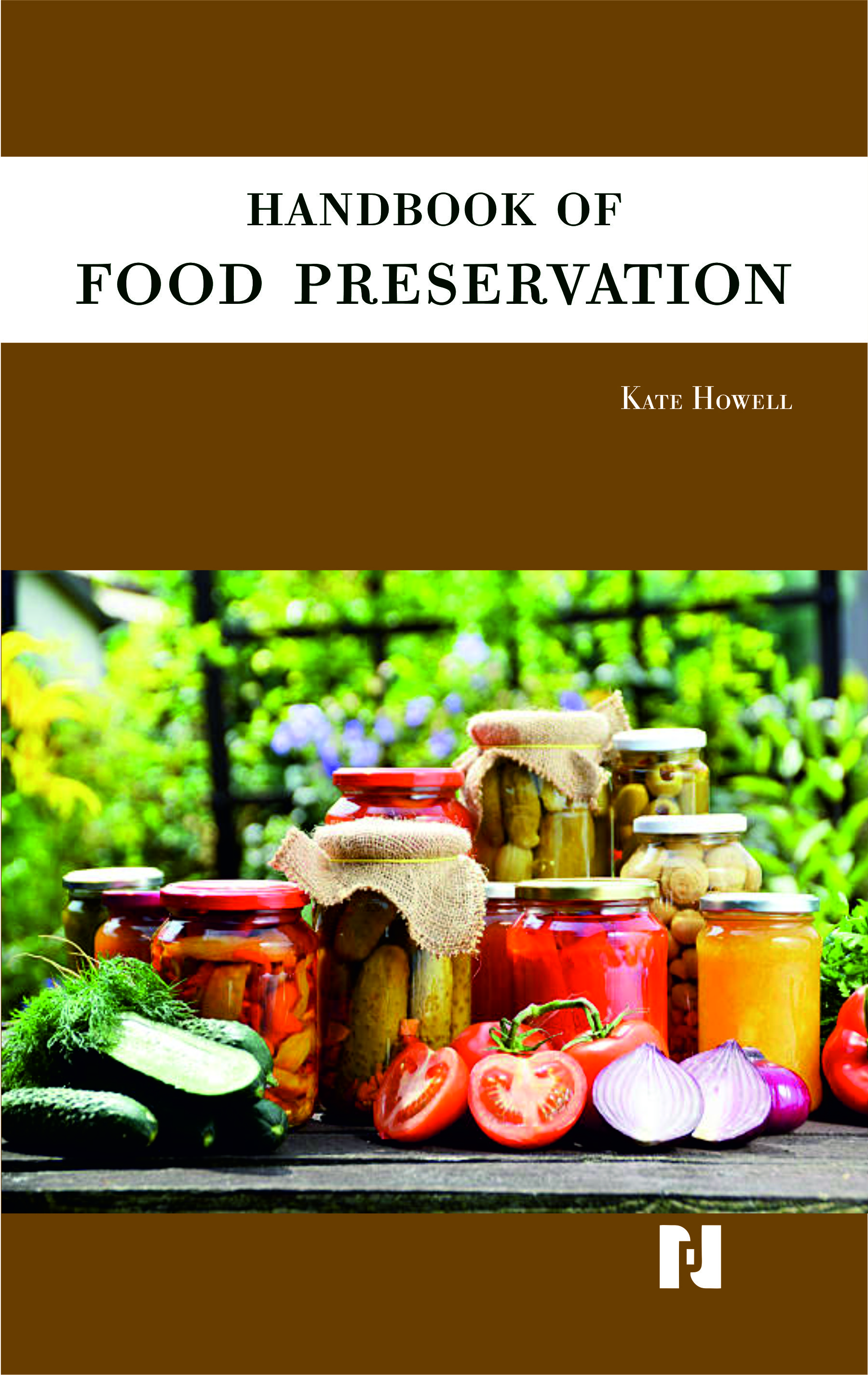
The processing of food is no longer simple or straightforward, but is now a highly interdisciplinary science. A number of new techniques have developed to extend shelf-life, minimize risk, protect the environment, and improve functional, sensory, and nutritional properties. The ever-increasing number of food products and preservation techniques creates a great demand for an up to date handbook that will facilitate understanding of the methods, technology, and science involved in the manipulation of these conventional and sophisticated preservation methods. This text serves as a definitive resource on food preservation. It emphasizes practical, costeffective, and safe-strategies for implementing preservation techniques and dissects the exact mode or mechanism involved in each method by highlighting the effects on food properties. The book begins with an overview of food preservation and handling including fresh fruits and vegetables, grains and pulses, fish, red meat, and milk. It presents comprehensive preservation methods based on chemical and microbiological additives, such as fermentation and pH lowering agents. The book details methods of physical manipulation involving modified atmosphere packaging, membrane technology, surface treatment, and edible coating. There is also an extensive description of preservation methods using thermal and other energy such as irradiation, high-pressure, and pulsed electric or magnetic fields. Finally, the book presents a range of indirect approaches to improve quality and safety and good manufacturing practices. Containing fundamental and practical aspects of today's current and emerging preservation methods, the Handbook of Food Preservation, Second Edition helps practicing industrial and academic food scientists, technologists, and engineers develop high-quality, safe products through better understanding and control of the processes. The book provides information regarding the common food preservation methods such as blanching, thermal processing of foods, canning, extrusion-cooking, drying or dehydration of foods, chilling, and freezing. It also describes the principles and applications of new thermal and non-thermal food processing technologies, i.e., microwave heating, ohmic heating, high pressure (HP) processing, pulsed electric field (PEF) processing, magnetic fields, ultrasound, use of edible films and coatings, food packaging-aseptic packaging, and modified atmosphere, biosensor and ozone applications. The book helps you keep up with diverse consumer demands and rapidly
Dr. Kate Howell, Associate Professor (Food Chemistry), School of Agriculture, Food and Ecosystem Sciences is a microbiologist and biochemist. Her key interest is how microbial interactions and ecology in agricultural and food systems can impact the flavour, aroma, function and health properties of food. Kate works with a wide range of industries in food and beverage production, and is focussed on microbiological enhancement of the nutritional and functional properties of food. Concurrently with her academic role, Kate is working in Chancellery as a member of the Researcher Development Unit. Her role in the RDU is to provide academic oversight and delivery of key schemes at the University, including graduate research supervisor development and a focus on GR development.
Preface 1. FOOD PRESERVATION: OVERVIEW 2. POSTHARVEST PHYSIOLOGY OF FRUIT AND VEGETABLES 3. POSTHARVEST HANDLING AND TREATMENTS OF FRUITS AND VEGETABLES 4. POSTHARVEST HANDLING OF GRAINS AND PULSES 5. MINIMAL PROCESSING OF FRUITS AND VEGETABLES 6. POSTHARVEST HANDLING AND PRESERVATION OF FRESH FISH AND SEAFOOD 7. POSTHARVEST HANDLING OF RED MEAT 8. POSTHARVEST HANDLING OF MILK 9. FERMENTATION AS A METHOD FOR FOOD PRESERVATION 10. NATURAL ANTIMICROBIALS FOR FOOD PRESERVATION Bibliography Index

$280.00