
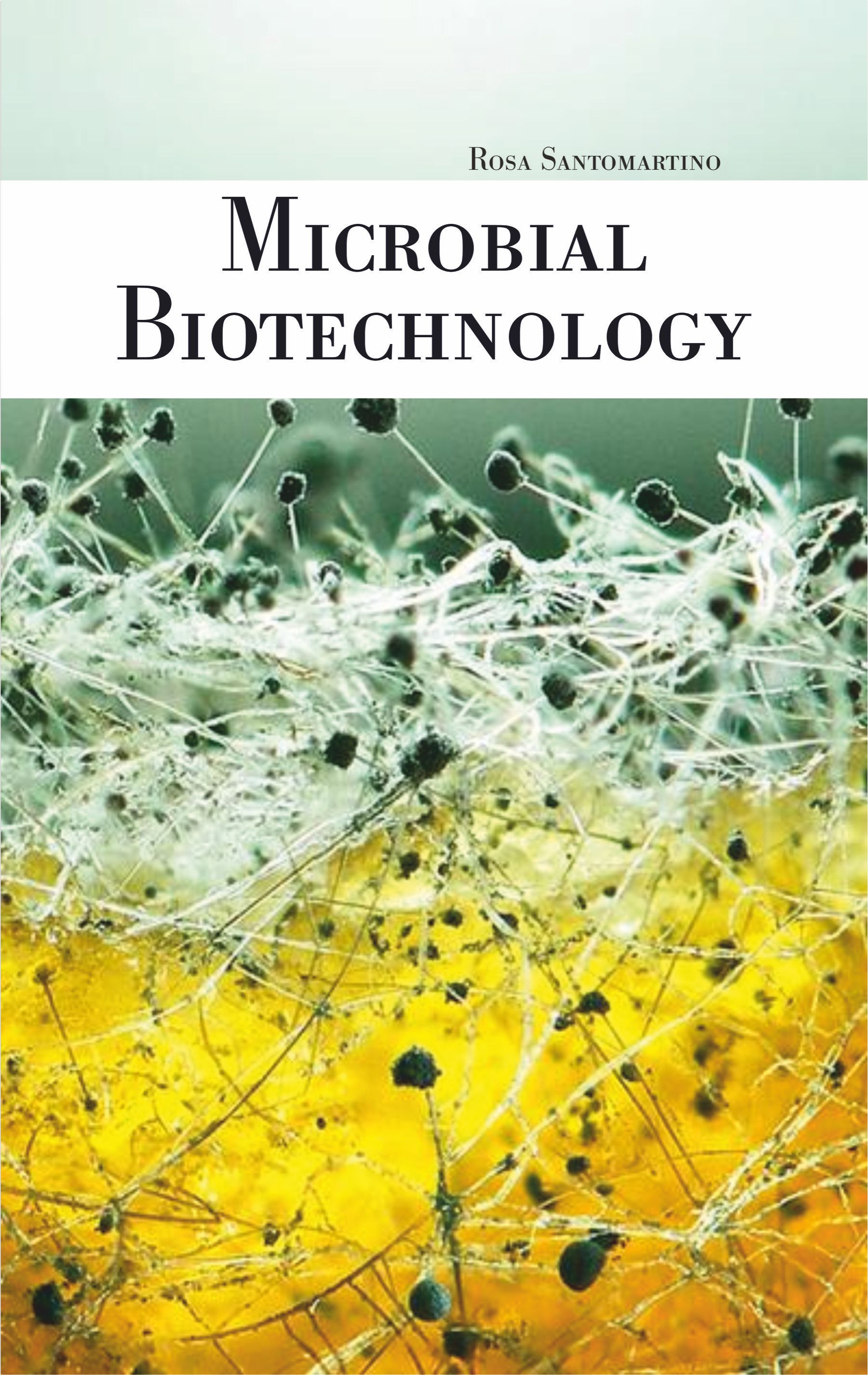
Biotechnology is the science of using technology to improve or modify organisms for the benefit of humans. Humans have been attempting to change nature since ancient times. The science started when humans took plants and animals from their natural habitats and domesticated them to bring them closer to their abodes. Ever observant and curious, humans proceeded to breed the male and female parents of plants or animals to come up with offspring with even better traits than the parents. Early humans also discovered and developed the process of fermentation that gave us a wide array of food products such as wine, bread, cheese, and many others. Today's modern biotechnology enables the combination of genetic materials from unrelated organisms to generate novel products used in agriculture, medicine, and other industries. This book delves into the fundamentals and applications of microbial biotechnology from ancient times to the present. Knowledge in microbiology is growing exponentially through the determination of genomic sequences of hundreds of microorganisms and the invention of new technologies, such as genomics, transcriptomics, and proteomics, to deal with this avalanche of information. These genomic data are now exploited in thousands of applications, ranging from medicine, agriculture, organic chemistry, public health, and biomass conversion, to biomining. Microorganisms are the most versatile and adaptable forms of life on Earth, and they have existed here for some 3.5 billion years. Indeed, for the first 2 billion years of their existence, prokaryotes alone ruled the biosphere, colonizing every accessible ecological niche, from glacial ice to the hydrothermal vents of the deep-sea bottoms. As these early prokaryotes evolved, they developed the major metabolic pathways characteristic of all living organisms today, as well as various other metabolic processes, such as nitrogen fixation, still restricted to prokaryotes alone. Over their long period of global dominance, prokaryotes also changed the earth, transforming its anaerobic atmosphere to one rich in oxygen and generating massive amounts of organic compounds. Eventually, they created an environment suited to the maintenance of more complex forms of life. Today, the biochemistry and physiology of bacteria and other microorganisms provide a living record of several billion years' worth of genetic responses to an ever-changing world. At the same time, their physiologic and metabolic versatility and their ability to survive in small niches cause them to be much less affected by the changes in the biosphere than are larger, more complex forms of life. Thus, it is likely that representatives of most of the microbial species that existed before humans are still here to be explored.
Dr. Rosa Santomartino is an Assistant Professor in the Department of Biological and Environmental Engineering at Cornell University's College of Agriculture and Life Sciences. She is a space microbiologist and biotechnologist with a deep interest in understanding microbial behavior under space conditions. Her research focuses on leveraging this knowledge to advance sustainable space exploration and to address pressing environmental challenges here on Earth. Dr. Santomartino earned her Ph.D. in Molecular Biology from Sapienza University of Rome. During her doctoral studies, she completed internships at Claude Bernard University Lyon 1 in France and at Universidad Nacional Autónoma de México, earning the title of Doctor Europaeus. In 2018, Dr. Santomartino joined the University of Edinburgh as a postdoctoral research associate in microbial astrobiology. There, she led two groundbreaking space microbiology experiments-BioRock and BioAsteroid-conducted aboard the International Space Station.
| Preface Chapter 1. Introduction to Microbial Biotechnology Definition and Scope of Microbial Biotechnology Historical Development and Milestones Microorganisms Used in Biotechnology: Types and Characteristics Basic Principles of Microbial Growth and Metabolism Overview of Industrial Applications Current Trends and Future Prospects Chapter 2. Microbial Genetics and Genetic Engineering Structure and Function of Microbial Genomes Gene Expression and Regulation in Microbes Tools and Techniques in Genetic Engineering Recombinant DNA Technology CRISPR-Cas Systems and Genome Editing Chapter 3. Fermentation Technology and Bioprocess Engineering Fundamentals of Fermentation Processes Types of Fermentation Systems (Batch, Fed-Batch, Continuous) Bioreactors: Design and Operation Scale-Up and Optimization of Fermentation Processes Chapter 4. Microbial Enzymes in Biotechnology Classification and Properties of Microbial Enzymes Production and Purification of Industrial Enzymes Enzyme Immobilization Techniques Applications of Enzymes in Food Industry Chapter 5. Microbial Metabolites and Secondary Metabolism Primary vs. Secondary Metabolites: Definitions and Differences Antibiotics: Types, Biosynthesis, and Mechanism of Action Microbial Pigments and Their Applications Vitamins and Hormones Produced by Microbes |
Chapter 6. Environmental Microbial Biotechnology Microbial Bioremediation: Concepts and Mechanisms Wastewater Treatment Using Microorganisms Microbial Degradation of Xenobiotics and Pollutants Microbial Fuel Cells and Bioenergy Production Chapter 7. Industrial Microbiology and Microbial Products Production of Alcohols and Organic Acids Microbial Production of Amino Acids and Organic Solvents Bioplastic and Biopolymer Production by Microorganisms Microbial Biosurfactants and Their Applications Chapter 8. Microbial Pathways and Metabolic Engineering Central Carbon Metabolism in Microorganisms Biosynthetic Pathways for Key Biomolecules Regulatory Networks in Microbial Metabolism Metabolic Flux Analysis and Modeling Chapter 9. Microbial Genomics, Proteomics, and Systems Biology Whole Genome Sequencing and Annotation Comparative Genomics of Microorganisms Microbial Transcriptomics and Gene Expression Profiling Proteomics Techniques and Applications Chapter 10. Microbial Biocontrol and Agricultural Biotechnology Microbial Biocontrol Agents: Types and Mechanisms Plant Growth-Promoting Rhizobacteria (PGPR) Microbial Biofertilizers and Soil Health Genetic Engineering of Microbes for Pest Resistance Bibliography Index |

$280.00