
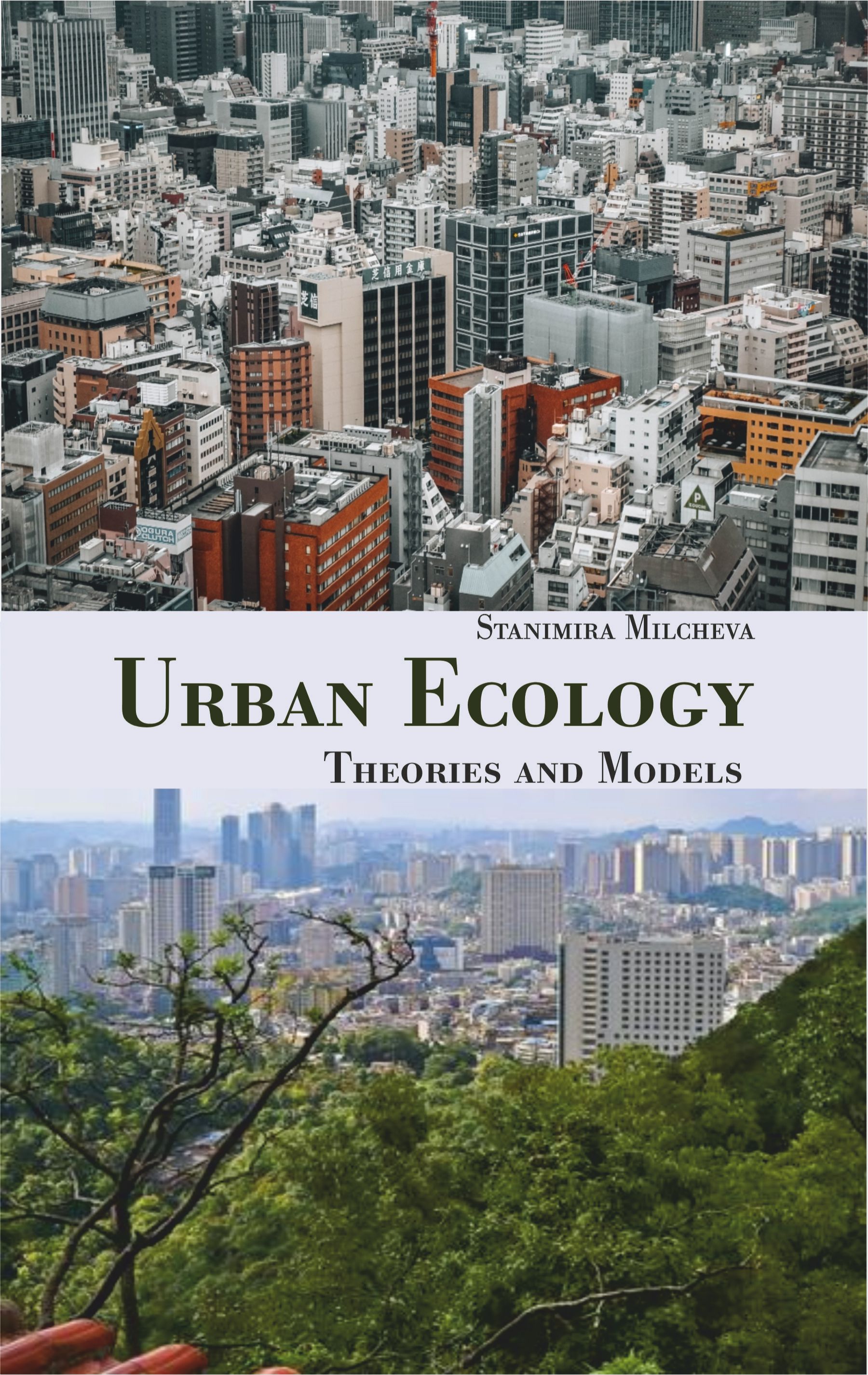
Urban ecology is the scientific study of the relation of living organisms with each other and their surroundings in an urban environment. An urban environment refers to environments dominated by high-density residential and commercial buildings, paved surfaces, and other urban-related factors that create a unique landscape. The goal of urban ecology is to achieve a balance between human culture and the natural environment. Urban ecology is a recent field of study compared to ecology. Currently, most of the information in this field is based on the easier to study species of mammals and birds. To close the gap in knowledge, attention should be paid to all species in the urban space like insects and fish. This study should also expand to suburban spaces with its unique mix of development and surrounding nature. The methods and studies of urban ecology is a subset of ecology. The study of urban ecology carries increasing importance because more than 50% of the world's population today lives in urban areas. It is also estimated that within the next 40 years, two thirds of the world's population will be living in expanding urban centers. The ecological processes in the urban environment are comparable to those outside the urban context. However, the types of urban habitats and the species that inhabit them are poorly documented which is why more research should be done in urban ecology. Urban ecologists proposed a number of theories for determining man's adaptation to social space which has been referred to by them as the ecological units. Robert Park (1952) stated about the concept of 'natural areas' which is marked by definable physical features and a high degree of cultural uniformity among the resident or functioning population. The concept was also established by Paul K. Hatt (1946) and Hervey W. Zorbaugh (1929).
Stanimira Milcheva is a professor in Real Estate Finance at the University College London. Stani has a background in financial economics and has published in finance and real estate journals such as the Journal of Corporate Finance, the Journal of Banking and Finance, Regional Science and Urban Economics, the Journal of Real Estate Finance and Economics, the Journal of Macroeconomics, Journal of Housing Economics, Energy Economics. Stani is the director of the Affordable Housing Centre and the founder of the Shared Ownership Data Initiative (SODI) which works with registered providers and key stakeholders in the provision of affordable housing to create transparency on the Shared Ownership and affordable housing market. Do get in touch, if you are interested in joining SODI. Stani has led various funding and advisory projects, working with policy makers and key stakeholders in the affordable housing sector. Those include the Department for Levelling Up, Housing and Communities, the National Housing Federation, the Consortium for Southeastern Housing Associations, a number of housing associations, Kent County Council, the Welsh Government, the European Association for Public Real Estate, the Real Estate Research Institute, the Urban Land Institute, etc. Stani is a Hoyt Waimer School Academic Fellow, and a fellow at the Centre for Finance at UCL. Stani has been awarded prizes for research including winner of the Asian Real Estate Society Royal Institution of Chartered Surveyors (RICS) Best Paper Award, best research output for 'Thinking out the Box' by the Homer Hoyt Institute, best research output by Cushman and Wakefield, and best research output by the University of Reading Research Endowment Trust Fund. Stani in a frequent speaker at the Allied Social Sciences Association (ASSA) & American Real Estate and Urban Economics Association (AREUEA) conferences.
| Preface Chapter 1 The Urban Ecosystem 1.1 THE DYNAMICS OF URBAN(ECO)SYSTEMS 1.2 CITIES AS HUMAN SYSTEMS 1.3 CITIES AS ECOLOGICAL SYSTEMS 1.4 CITIES AS HYBRID ECOSYSTEMS 1.5 COMPLEXITY, EMERGENT PROPERTIES, AND SELF ORGANIZATION 1.6 RESILIENCE IN URBAN ECOSYSTEMS 1.7 RATIONALE FOR A SYNTHESIS Chapter 2 Humans as a Component of Ecosystems 2.1 EMERGENCE AND EVOLUTION OF SETTLEMENT PATTERNS 2.2 MODELING URBAN DEVELOPMENT AND ECOLOGY 2.3 AN AGENT-BASED HIERARCHICAL MODEL 2.4 MODELING CHANGES IN LAND USE AND LAND COVER 2.5 CHANGES IN LAND USE AND LAND COVER IN CENTRAL PUGET SOUND Chapter 3 Urban Patterns and Ecosystem Function 3.1 PATTERNS, PROCESSES, AND FUNCTIONS IN URBAN ECOSYSTEMS 3.2 NET PRIMARY PRODUCTIVITY 3.3 HYDROLOGICAL FUNCTION 3.4 NUTRIENT CYCLES 3.5 BIODIVERSITY 3.6 DISTURBANCE REGIMES 3.7 AN EMPIRICAL STUDY IN PUGET SOUND Chapter 4 Landscape Signatures 4.1 HYBRID URBAN LANDSCAPES 4.2 GRADIENTS, PATCHES, NETWORKS, AND HIERARCHIES 4.3 URBAN LANDSCAPE SIGNATURES 4.4 MEASURING URBAN LANDSCAPE PATTERNS 4.5 DETECTING LANDSCAPE PATTERNS IN PUGET SOUND 4.6 MONITORING LANDSCAPE CHANGE IN PUGET SOUND Chapter 5 Hydrological Processes 5.1 THE URBAN HYDROLOGICAL CYCLE 5.2 URBAN HYDROLOGICAL FUNCTIONS 5.3 HUMAN-INDUCED CHANGES IN URBAN WATERSHEDS 5.4 URBAN PATTERNS AND STREAM BIOTIC INTEGRITY |
Chapter 6 Biogeochemical Processes 6.1 URBAN BIOGEOCHEMISTRY 6.2 THE CARBON CYCLE 6.3 THE SULFUR CYCLE 6.4 THE PHOSPHORUS CYCLE 6.5 THE NITROGEN CYCLE 6.6 URBAN PATTERNS AND NUTRIENT CYCLING Chapter 7 Atmospheric Processes 7.1 TROPOSPHERIC OZONE 7.2 URBAN AIR QUALITY AND CLIMATE CHANGE 7.3 URBAN HEAT ISLANDS 7.4 URBAN PATTERNS AND AIR QUALITY Chapter 8 Population and Community Dynamics 8.1 BIODIVERSITY, ECOSYSTEM FUNCTION, AND RESILIENCE 8.2 URBAN PATCH DYNAMICS 8.3 URBAN ECOSYSTEM PROCESSES AND BIODIVERSITY 8.4 THE INTERMEDIATE HYPOTHESIS: A CASE STUDY IN THE PUGET SOUND Chapter 9 Futures of Urban Ecosystems 9.1 THE CHALLENGES: COMPLEXITY, HETEROGENEITY, AND SURPRISE 9.2 COMPLEXITY AND PREDICTABILITY 9.3 SPATIAL AND TEMPORAL HETEROGENEITY 9.4 THRESHOLD, DISCONTINUITY, AND SURPRISES 9.5 SCENARIO PLANNING AND ADAPTIVE MANAGEMENT 9.6 HYPOTHETICAL SCENARIOS OF URBAN ECOSYSTEM FUNCTIONS Chapter 10 Urban Ecology: A Synthesis 10.1 A HYBRID ECOLOGY 10.2 TOWARD A THEORY OF URBAN ECOLOGY 10.3 BUILDING INTEGRATED MODELS 10.4 A RESEARCH AGENDA FOR URBAN ECOLOGY 10.5 IMPLICATIONS FOR URBAN PLANNING 10.6 A FINAL NOTE Glossary References Index |

$280.00