
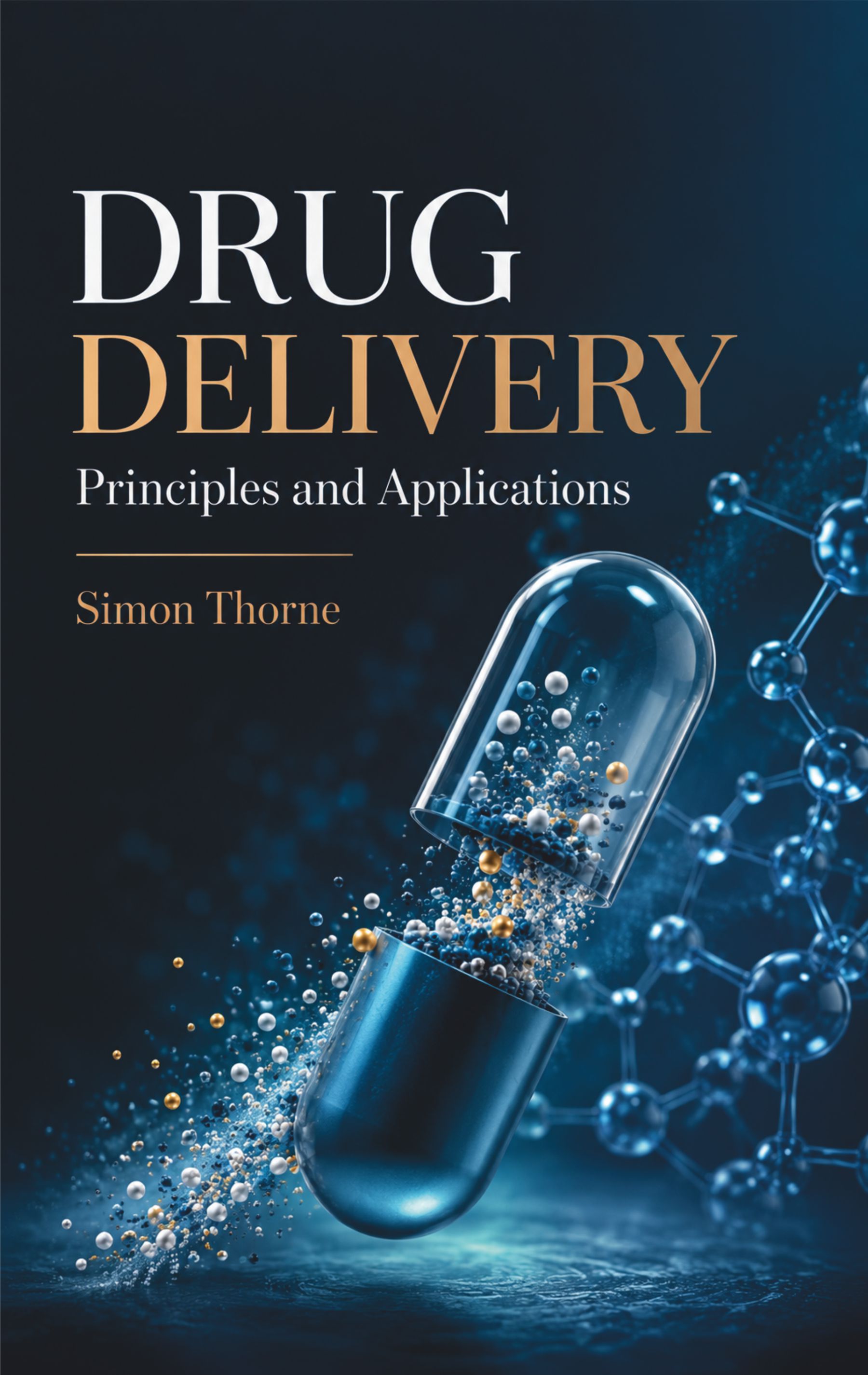
There is an acute demand for good general reference texts in the drug delivery discipline and Drug Delivery: Principles and Applications has attempted to serve this important purpose. Distinguished scientists with several years of experience in their area of expertise have written and edited the text. Drug Delivery: Principles and Applications is a foundational text that bridges the gap between molecular discovery and clinical implementation. It explores how cutting-edge formulations like nanoparticles, liposomes, and transdermal patches overcome biological barriers to safely transport medicine directly to targeted sites within the body. This book will aim to introduce concepts of drug delivery for medical challenges. The course is designed to be modular, with each module focusing on the following topics: Diffusion and permeation of drugs in biological systems; Pharmacokinetics; Challenges and strategies for various drug delivery routes; Polymers; Drug delivery systems: polymer drug conjugates, matrix based systems, reservoir and erodible systems; Nano and Micro-particles; Protein adsorption and tissue engineering; Immune response to biomaterials; Vaccine; Responsive and targeted delivery systems; Nanotoxicology and Regulatory pathways. Students are expected to work on a group project to propose a drug delivery application for an existing medical need. The text unlocks the body’s natural defense systems (such as the blood-brain barrier and enzymatic degradation) and how scientists engineer vehicles to bypass them; Examines the mechanics of liposomes, polymer microspheres, and smart nanocarriers designed to concentrate drugs in diseased tissues (like tumors) while sparing healthy cells.; Covers modern advancements in mucosal, pulmonary, and transdermal routes that eliminate the need for traditional injections.
Dr. Simon Thorne is a pioneer in targeted therapeutics and bioengineering. As a Professor of Pharmaceutical Sciences, he bridges the gap between molecular biology and clinical delivery systems. His innovative work centers on stimuli-responsive nanomaterials designed to bypass biological barriers and deliver precision treatments directly to diseased tissues. Dr. Simon's fascination with chemistry and medicine began early, often citing the bustling local pharmacies and rich botanical traditions as his first laboratories. He pursued his Bachelor of Pharmacy at the American Institute of Pharmaceutical Sciences and Research (APSRU). He then persuaded his PhD in Biomedical Engineering from Johns Hopkins University. Dr. Simon's laboratory is best known for developing "smart" delivery vectors. His early work revolutionized how we understand physiological barriers, particularly the Blood-Brain Barrier (BBB). He is credited with creating targeted, peptide-mediated nanocarriers that transport therapeutics directly to tumor sites while sparing healthy cells.
| Preface 1. INTRODUCTION 1.1 Targeted drug delivery 1.2 Novel delivery modalities 1.3 Future considerations 2. DRUG DELIVERY SYSTEM: PAST, PRESENT, AND FUTURE PERSPECTIVES 2.1 Introduction 2.2 The Initial Phase of Drug Delivery Systems 2.3 Recent Drug Delivery Systems 2.4 Drug Delivery via Carriers 2.5 Recent Drug Delivery Systems 2.6 Ceramic-Based Drug Delivery System 2.7 Polysaccharide-Based Drug Delivery System 2.8 Closed Loop Insulin Delivery System 2.9 Liposome-Mediated Drug Delivery 2.10 Dendrimers 2.11 PEGylated Drug Delivery System 2.12 Antibody-Drug Conjugate System 2.13 Mesoporous Silica-Based Drug Delivery 2.14 Transdermal Drug Delivery System 2.15 Hydrogel-Mediated Ocular Drug Delivery 2.16 Challenges with Current Drug Delivery Systems 2.17 Future Direction and Conclusion 3. CONTROLLED DRUG DELIVERY SYSTEMS AND POLYMERS 3.1 Controlled Drug Delivery Systems 3.2 Polymers 4. MICROENCAPSULATION, MUCOSAL AND IMPLANTABLE DRUG DELIVERY SYSTEMS 4.1 Microencapsulation 4.2 Mucosal Drug Delivery System 4.3 Implantable Drug Delivery Systems (IDDS) 5. TRANSDERMAL, GASTRORETENTIVE AND NASOPULMONARY DRUG DELIVERY SYSTEMS 5.1 Transdermal Drug Delivery System (TDDS) 5.2 Gastroretentive Drug Delivery Systems (GRDDS) 5.3 Nasopulmonary Drug Delivery System 6. TARGETED DRUG DELIVERY SYSTEM 6.1 Introduction 6.2 Strategies Of Drug Targeting 6.3 Liposomes 6.4 Nanoparticles 6.5 Aquasomes 6.6 Phytosome 6.7 Electrosomes 6.8 Niosomes 6.8 Pharmacosomes 6.9 Resealed Erythrocytes 6.10 Specialized Pharmaceutical Emulsions 7. OCULAR AND INTRAUTERINE DRUG DELIVERY SYSTEMS 7.1 Ocular Drug Delivery Systems 7.2 Intrauterine Drug Delivery Systems |
|

$280.00