
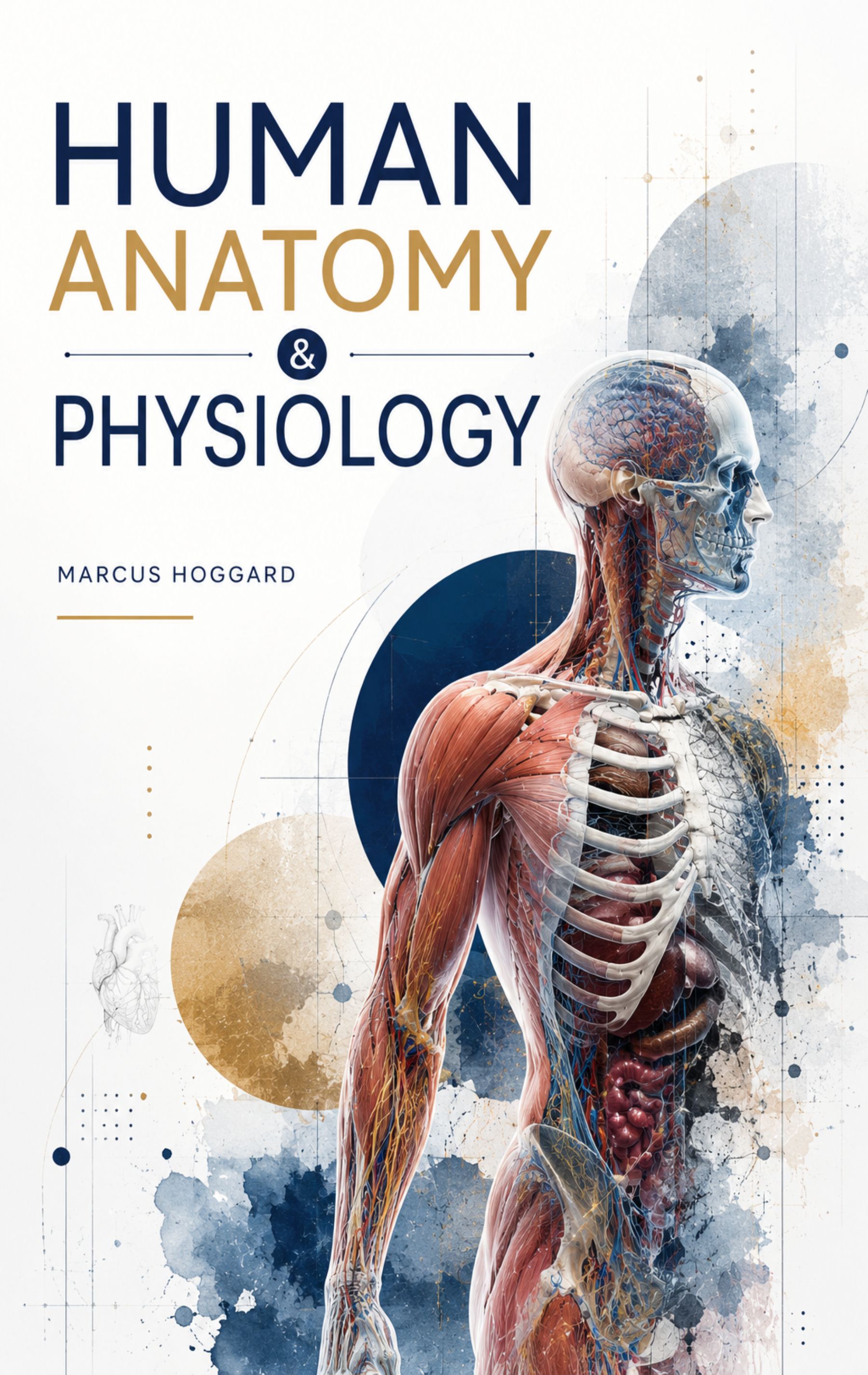
The human body is a complex and intricate system, composed of numerous structures that function together to sustain life. Understanding the organization of the body and the specific terminology used to describe its parts is fundamental for anyone studying human anatomy. This book aims to introduce the basic anatomical terms and the organization of the human body, providing a foundation for further study in the field of anatomy and physiology. Human Anatomy and Physiology is the premier book for understanding the structure and function of the human body. It bridges basic terminology with clinical scenarios, making it an essential resource for nursing, pharmacy, allied health, and exercise science programs. This book provides information for an Anatomy & Physiology and discusses the levels of biological organization, body support & movement, and nervous regulation and integration. Each chapter contains relevant terminology, diagrams to assist the learner in learning the material in-depth. Each chapter blends theoretical knowledge with practical insights, supported by illustrative diagrams, clinical correlations, and case studies to enhance understanding and application. Designed for undergraduate and graduate students in biology, physiology, anatomy, medicine, and related fields, this textbook also serves as a valuable resource for educators and professionals seeking a comprehensive reference.
Dr. Marcus Hoggard, PhD, is a distinguished professor and researcher specializing in human anatomy and evolutionary physiology. He earned his doctorate from the Johns Hopkins University School of Medicine, focusing on the mechanics of cardiac cellular adaptation. Dr. Marcus has spent over two decades in the classroom, teaching undergraduate and graduate students how to appreciate the intricate design of the human body. Dr. Marcus believes that learning anatomy should not feel like memorizing a dictionary. His writing strips away dense academic jargon to reveal the human body as a dynamic, living machine. By using relatable everyday analogies, he helps students understand how structural form directly dictates biological function. When he is not in the laboratory or lecture hall, Marcus is an avid long-distance trail runner. He enjoys experiencing firsthand the very physiological processes such as lactic acid clearance and thermoregulation that he writes about in his textbooks. He currently resides in Chicago, Illinois.
| Preface 1. INTRODUCTION TO ANATOMY AND PHYSIOLOGY, CELL AND TISSUE 1.1 Introduction of Anatomy and Physiology 1.2 Anatomy and Physiology: Importance and Role 1.3 Introduction, Types and Function of Cell 1.4 Cell Membrane 1.5 Cell Division-Metosis and Meiosis 1.6 Tissue: Various Types and Functions 1.7 Types of Tissues 1.8 Shapes of Neurons 2. THE SKELETON, JOINTS, THE CIRCULATORY SYSTEM, AND BLOOD 2.1 The Arrangement of Skeleton 2.2 Joints 2.3 Fundamental Movements 2.4 The Circulatory System 3. THE RESPIRATORY SYSTEM, THE DIGESTIVE SYSTEM AND DIGESTIVE ORGANS 3.1 The Respiratory System 3.2 The Digestive System 4. SENSE ORGANS, THE SKIN, AND THE ORGANS OF TASTE AND SMELL 4.1 Sense Organs 4.2 Human Ear: Structure and Functions 4.3 Organs of Taste and Smell 4.4 Organs of Smell 5. THE MUSCULAR SYSTEM 5.1 Muscular System 5.2 Types of Muscles 5.3 Major Muscles of Human Body 5.4 Structure, Composition, Properties and Functions of Skeletal Muscles 5.5 Muscle Fibers Types and Their Characteristics 5.6 Sliding Filament Theory of Muscle Contraction 6. THE NERVOUS SYSTEM 6.1 Nervous System: Structure and Function of Brain and Spinal Cord 6.2 The Autonomic Nervous System and Peripheral Nervous System 6.3 Examples of The Peripheral Nervous System Response 6.4 Nerve Control of Muscular Activity: Reflex Action 6.5 Reflex Action 6.6 Neuromuscular Junction, Nerve Transmission Across It 7. THE EXCRETORY SYSTEM 7.1 The Excretory System: Structure and Functions of The Kidneys and The Skin 7.2 The Endocrine Glands: Functions of Pituitary, Tyroid, Parathyroid, Aderrnal, Pancreatic, and The Sex Glands 7.3 Functions of Pituitary 7.4 Thyroid 7.5 Parathyroid Gland 7.6 Adrenal Gland 7.7 Pancreatic Gland 7.8 Testis and Ovary In Mammals 7.9 The Lymphatic System: The Lymphatic Glands, The Spleen |
|

$280.00