
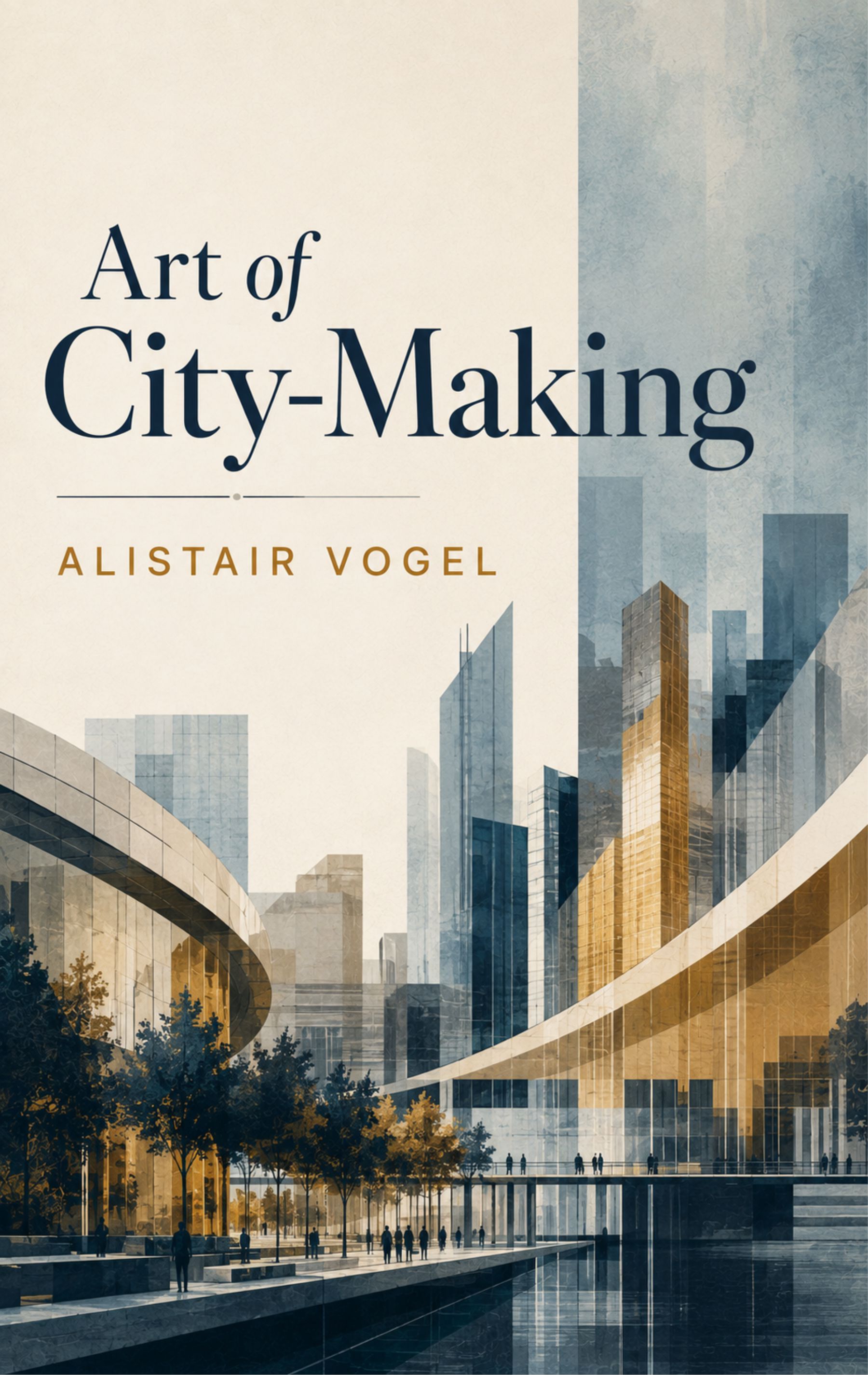
The Art of City Making argues that city-making is an art rather than a rigid formula. It contends that creating thriving urban environments requires more than just traditional architecture and engineering, urging citizens and leaders to become co-creators of their cities. The book emphasizes that the fundamental vision for 21st-century cities should be to act as the most imaginative cities "for" the world rather than just "in" the world. This simple linguistic shift introduces an ethical foundation that helps cities become places of solidarity and better alignment with individual, group, and planetary needs. The book explores the paradoxes, strategic dilemmas, and fault lines that make creating the "good city" so difficult. It is frequently utilized by urban planners, policymakers, and civic leaders looking to break down departmental silos and encourage a holistic, dynamic approach to managing urban environments. Urban development is viewed as an art form built on ethics and human-centric values. It emphasizes moving away from building simply cities "in" the world toward building the most imaginative cities "for" the world. Public spaces are the living rooms of the city. The text emphasizes creating accessible, vibrant, and multi-functional spaces that encourage social interaction, debate, and a shared sense of belonging. Every city has a unique soul derived from its history, arts, and diverse populations. Place-making involves leveraging this cultural capital to create a distinct sense of place rather than succumbing to generic, homogenized development. Good urban design goes beyond mere visual appeal; it incorporates permeability, variety, and human scale. The focus is on creating environments that feel comfortable, safe, and stimulate the civic imagination. Movement systems are the circulatory system of a city. This book promotes integrating public transit, pedestrian walkways, and cycling routes to minimize isolation and enhance the daily experience of urban life. Neighborhoods should function as the foundational building blocks of solidarity. This theme emphasizes the creation of mixed-income, diverse housing developments that foster community cohesion and resist socioeconomic segregation. Sustainable cities require an alignment between the built environment and the natural ecosystem.
Dr. Alistair Vogel is a globally renowned urban theorist, landscape architect, and professor of civic design at the M.I. Institute of Urban Futures. Over a three-decade career, Vogel has advised municipal governments across six continents on post-industrial renewal and participatory master planning. His design philosophy fuses classical European spatial structure with climate-resilient ecological engineering. He is a frequent keynote speaker at the UN-Habitat World Urban Forum and lives in a self-sustaining co-housing community in Copenhagen. Dr. Alistair is a renowned Urban Futurist and the founding director of the Metropolis Co-Laboratory. Blending spatial design with social psychology and civic ecology, his work focuses on helping communities rebuild and adapt their environments to changing global dynamics. By shifting the focus from rigid urban planning to the "craftsmanship of the city," his work champions the idea that citymaking is fundamentally an expression of human potential.
| Preface Chapter 1. Foundations of the Art of City-Making Concept and Meaning of City-Making Historical Evolution of Cities Art, Science, and Practice of Urban Design Human Settlements and Urban Form Cultural and Symbolic Dimensions of Cities City-Making as a Multidisciplinary Endeavor Role of Power and Governance in Urban Form Contemporary Relevance of City-Making Chapter 2. Urban Morphology and Spatial Structure Elements of Urban Form Street Networks and Block Patterns Land Use Organization and Zoning Density, Scale, and Proportion Public and Private Realms Urban Edges, Nodes, and Landmarks Morphological Change over Time Reading and Interpreting City Structure Chapter 3. Public Space and Civic Life Meaning and Functions of Public Space Streets as Social and Cultural Spaces Squares, Plazas, and Urban Commons Parks and Green Public Areas Informal Use of Public Spaces Safety, Accessibility, and Inclusiveness Design for Social Interaction Civic Identity and Collective Memory Chapter 4. Culture, Identity, and Place-Making Sense of Place and Urban Experience Cultural Landscapes and City Identity Architecture as Cultural Expression Heritage Conservation and Urban Change Art, Memory, and Urban Narratives Place-Making in Diverse Societies Global Influences and Local Character Creative Cities and Cultural Economies Chapter 5. Urban Design Principles and Aesthetics Visual Order and Urban Composition Scale, Rhythm, and Proportion in Cities Streetscape Design and Urban Image Building Interfaces and Active Frontages Urban Design Codes and Guidelines Beauty, Meaning, and Urban Experience Critiques of Contemporary Urban Aesthetics Role of Designers in City-Making |
|

$280.00