
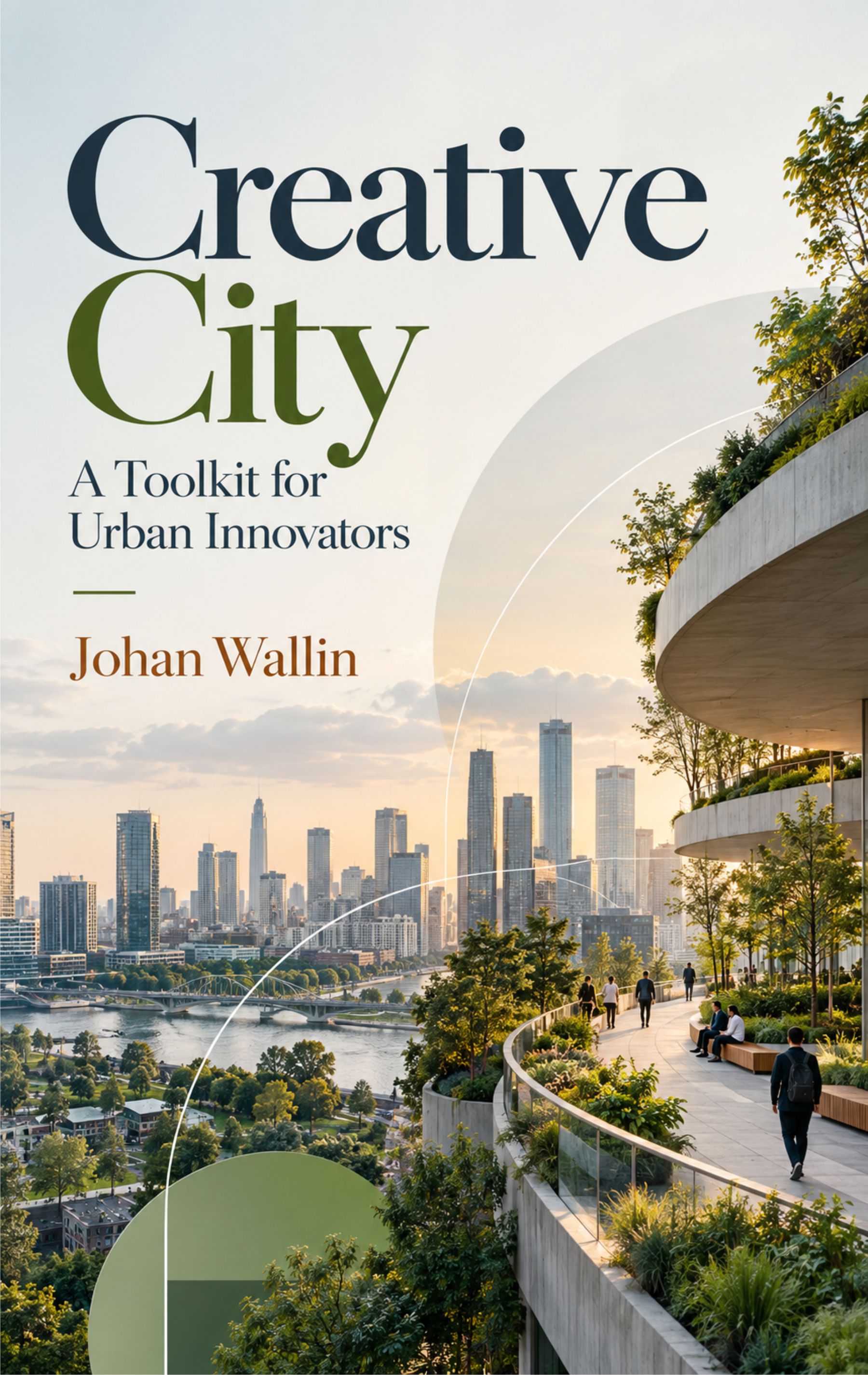
The Creative City: A Toolkit for Urban Innovators challenges leaders to rethink urban management by harnessing local talent and civic imagination. Instead of relying on traditional infrastructure, it provides a practical framework for turning urban challenges into catalysts for sustainable economic and cultural regeneration. The book is structured into clear parts that move from foundational concepts to hands-on, practical strategies. The book focuses on the changing nature of cities, highlighting global shifts, urban crises, and why a fundamental paradigm shift in urban management is mandatory to solve modern problems Defines "civic creativity" and explores how cities can become ideas factories. It details the preconditions and creative milieus necessary to foster a culture of open innovation and inclusive participation. A conceptual toolkit of urban creativity acts as the practical heart of the book. It lays out a step-by-step strategic planning process, the Urban Innovations Matrix, and new indicators designed to measure and encourage civic creativity. Looks at the future of city development. It explores the transition from traditional rigid zoning and planning towards dynamic urban strategy-making, aiming to create holistic Learning Cities. The book serves as an invaluable unofficial finale to academic planning, taking theory into actionable practice. It provides the exact techniques to help decision-makers identify assets, nurture creative clusters, and build networks that connect government, businesses, and citizens.
Johan Wallin is not just an urban planner; he is an urban alchemist who views concrete, steel, and asphalt as a living canvas for human potential. Rather than evaluating cities merely by their transit lines or zoning laws, he approaches them through their heartbeat, hidden subcultures, and untapped collective imagination. Johan Wallin popularized the concept of the "Creative City," and spent decades rewriting the rules of modern urban living. He looks at a gridlocked intersection and sees a future public plaza; he looks at a decaying industrial district and envisions a sanctuary for artists, tech visionaries, and social disruptors. In 1978, he founded Comedia, a highly influential consultancy dedicated to rethinking major global urban issues. He has advised city leaders, grassroots activists, and cultural institutions in over 60 countries, helping them transform local identity into a powerful economic engine. He is famous for unlocking the greatest resource a city possesses not its infrastructure, but the minds, talents, and dreams of its citizens. In Creative City: A Toolkit for Urban Innovators, Johan Wallin distills decades of field research, late-night café conversations, and radical civic experiments into a practical handbook. He writes not from an academic ivory tower, but from the front lines of urban transformation. His work serves as a continuous reminder that the ultimate goal of city-making is to construct environments where humanity can truly flourish. When he isn't advising global metropolises or writing, Wallin can be found exploring the world's alleyways, hunting for the unique sparks of local genius that make each city irreplaceable.
| Preface Chapter 1. Understanding the Creative City Defining Creativity in Urban Contexts Evolution of the Creative City Concept Global Perspectives on Urban Innovation Cities as Hubs of Knowledge and Culture Interdisciplinary Approaches to Urban Creativity Measuring Creativity and Innovation Historical Case Studies of Creative Cities The Role of Planners and Innovators Chapter 2. Urban Culture and Creative Economies Cultural Industries and Urban Development Art, Music, and Performance in Cities Creative Clusters and Innovation Districts Tourism, Heritage, and Cultural Capital Entrepreneurship in the Creative Economy Social Innovation and Urban Start-Ups Cultural Policy and Economic Strategy Assessing Urban Cultural Impact Chapter 3. Spatial Planning for Creativity Designing for Flexible and Adaptive Spaces Creative Workspaces and Co-Working Hubs Public Spaces as Cultural Platforms Urban Regeneration and Creative Revitalization Neighborhoods as Creative Ecosystems Integrating Art and Architecture in Cities Zoning and Planning for Innovation Temporary and Pop-Up Urban Interventions Chapter 4. Technology and Smart Urban Innovation Digital Infrastructure for Creativity Smart Cities and Data-Driven Urban Solutions Digital Tools for Urban Design and Planning AI, IoT, and the Creative Economy Tech Hubs and Innovation Districts Open Data and Citizen Innovation Gamification and Digital Engagement Future Trends in Urban Tech and Creativity |
|

$280.00