
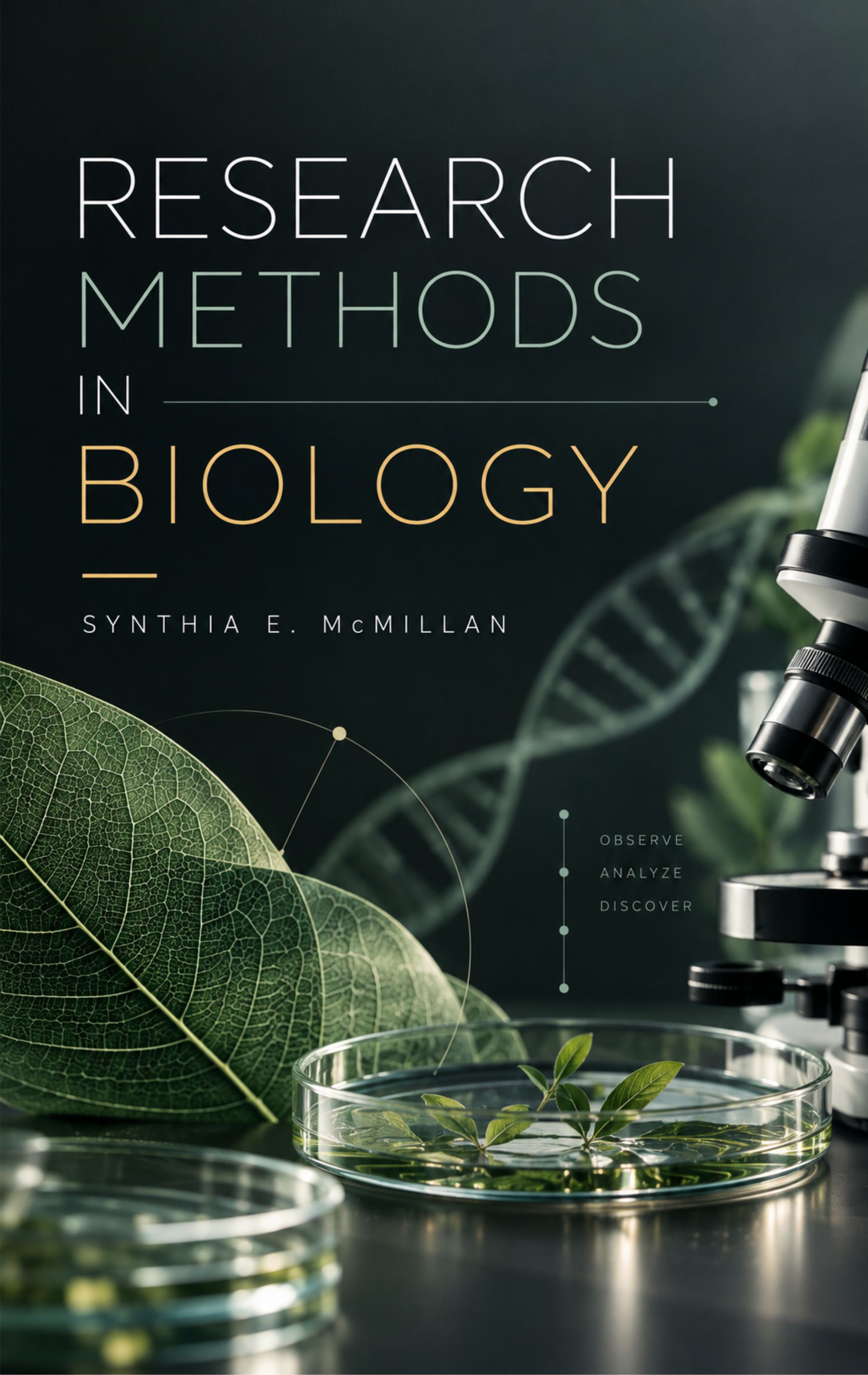
Research methods in biology encompass the systematic tools and techniques used to investigate living organisms, biological systems, and life processes. They are broadly categorized into laboratory experiments, field observations, computational modeling, and statistical analyses, enabling researchers to test hypotheses and uncover scientific truths. This book titled Research Methods in Biology is a comprehensive, end-to-end guide designed to equip students and researchers with the practical, theoretical, and analytical skills required to conduct rigorous scientific investigations across the biosciences. The curriculum integrates both theoretical foundations and practical laboratory or field protocols, organized by the following key sections. It begins with an Introduction to Biological Research and Research Design and Experimental Planning to teach hypothesis formulation, experimental controls, and variables. It contrasts Quantitative and Qualitative Methods for data collection. Covers hardware and methodologies from basic to advanced Microscopy and Imaging Techniques. This progresses into hands-on Cell and Tissue Culture Techniques used in modern biology. Explores foundational Molecular Biology Techniques (such as PCR and gel electrophoresis) and Biochemical and Protein Analysis Methods (such as chromatography and mass spectrometry). Details Microbiological Methods for culturing and identifying microbes, alongside Ecological and Field Research Methods for studying organisms in their natural habitats. Concludes with critical computational tools, focusing on Statistical Analysis in Biology (biostatistics) and Bioinformatics and Computational Biology for managing large genomic and proteomic datasets. This book is intended for students with various professional backgrounds. Multidisciplinary communication and research cooperation are increasingly important, so scientists in any one scientific community should be familiar with and respect the traditions of other scientific communities. Simply put, this book outlines the curriculum for doctoral candidates in medicine, but is also intended for students in the biological and biomedical fields.
Synthia E. McMillan is a pioneering systems biologist and research director at the Institute of Biological Sciences, specializing in the integration of computational algorithms with empirical wet-lab methodologies. With over two decades of international fieldwork and laboratory leadership, she bridges the gap between foundational ecological observation and advanced molecular data modeling. Dr. McMillan earned her Ph.D. in Computational Biology from the University of Oxford, where her foundational work helped revolutionize the way biological datasets are processed and interpreted. Following her doctoral studies, she spent several years conducting demanding ecological field research across the Amazon basin and remote Scandinavian tundra. This unique, on-the-ground exposure, combined with her rigorous laboratory tenure, shaped her belief that modern biology requires a seamless blend of traditional fieldcraft and high-throughput quantitative analysis.
| Preface Chapter 1. Introduction to Biological Research Nature and Scope of Biological Research Scientific Method in Biology Basic and Applied Research Interdisciplinary Approaches Ethics in Biological Research Safety and Laboratory Practices Chapter 2. Research Design and Experimental Planning Formulation of Research Questions Hypothesis Development Variables and Controls Experimental and Observational Studies Sampling Methods Randomization and Replication Bias and Error Control Chapter 3. Quantitative and Qualitative Methods Quantitative Data Collection Qualitative Research in Biology Field Studies and Surveys Laboratory Experiments Mixed-Methods Approaches Data Recording and Management Chapter 4. Microscopy and Imaging Techniques Light Microscopy Fluorescence Microscopy Confocal Microscopy Electron Microscopy Live-Cell Imaging Image Analysis and Interpretation Chapter 5. Molecular Biology Techniques DNA and RNA Extraction Polymerase Chain Reaction (PCR) Gel Electrophoresis DNA Sequencing Methods Gene Cloning CRISPR and Gene Editing Transcriptomics and Genomics Chapter 6. Biochemical and Protein Analysis Methods Protein Extraction and Purification Spectrophotometry Chromatography Techniques Western Blotting Enzyme Assays Mass Spectrometry |
|

$280.00