
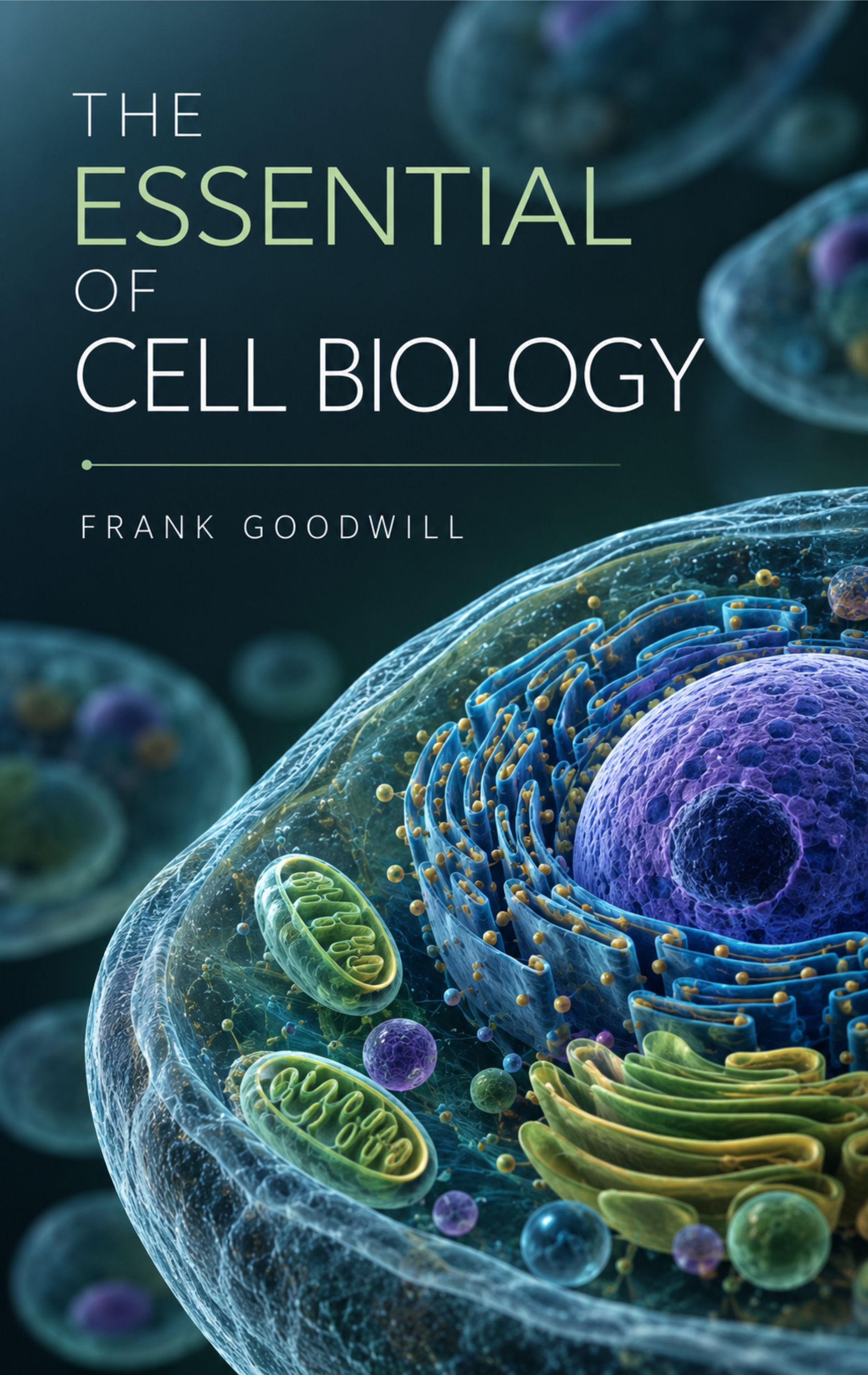
The Essence of Cell Biology is a comprehensive book designed to guide students through the complex, microscopic world of life's fundamental unit. By balancing foundational concepts with advanced technological insights, this text transforms intricate biological processes into accessible knowledge. Designed for undergraduate and graduate students, it bridges the gap between molecular interactions and human health by exploring everything from chemical foundations to advanced microscopy techniques. The book covers the fundamental characteristics of prokaryotic and eukaryotic cells, establishing the basic units of life. Details the atomic and molecular forces, macromolecules, and thermodynamics that make up living systems. Explores the compartmentalized interiors of cells, detailing the functions of membrane-bound organelles like mitochondria and lysosomes. Explains membrane architecture and the molecular mechanisms of active transport, passive transport, osmosis, and bulk transport. Analyzes how the nucleus acts as the data storage and command center, managing DNA packaging and replication. Outlines transcription, translation, and how proteins are folded, modified, and trafficked through the endoplasmic reticulum and Golgi apparatus. The book explores bioenergetics, including the processes of cellular respiration and photosynthesis, to explain how cells generate and utilize ATP. Details how cells interpret and respond to external stimuli, covering receptor function and signal transduction pathways. Focuses on mitosis, meiosis, and the checkpoints that regulate cell growth, duplication, and apoptosis. Examines microfilaments, microtubules, and motor proteins that provide structural support and facilitate intracellular and cellular movement. Discusses how unspecialized cells develop into distinct cell types and the mechanisms of tissue maintenance. Connects normal cellular function to disease states, explaining how genetic and structural defects trigger conditions like cancer. Introduces modern analytical methods, covering sub-cellular fractionation, flow cytometry, and advanced fluorescence microscopy. This textbook serves as a vital bridge between introductory biology and advanced molecular research. It presents cell biology not as a static collection of facts, but as a dynamic, evolving science that underpins all modern medicine and biotechnology.
Dr. Frank Goodwill is a visionary cell biologist and science educator at the Institute of Cellular Dynamics in Paris. Known for his engaging writing style, he bridges the gap between complex molecular mechanisms and human experience, drawing inspiration from both modern scientific breakthroughs and historical biology. Dr. Goodwill's passion for biology stems from a childhood spent exploring the microscopic ecosystems within local French waterways. He earned his doctorate in Biochemistry from the Sorbonne, where he specialized in organelle communication and cellular apoptosis (programmed cell death). His teaching career began unexpectedly when he found himself trying to explain the intricacies of the Golgi apparatus to a group of art students. This forced him to abandon complex, jargon-heavy lectures in favor of accessible, visual, and vivid narratives. This pedagogical approach forms the foundation of The Essence of Cell Biology, which is designed to make the building blocks of life as captivating as they are fundamental. Currently, Dr. Goodwill directs the Aristhène Laboratory, where his team investigates the cytoskeletal dynamics in neurodegenerative diseases. When not peering through electron microscopes or writing, he is an avid gardener, often using his understanding of plant cell walls and chloroplasts to cultivate rare orchids. He firmly believes that understanding the inner workings of cells allows us to appreciate the elegant choreography of life on a macroscopic scale.
| Preface Chapter 1. Introduction to Cell Biology The Cell Theory Discovery of the Cell Diversity of Cells Prokaryotic and Eukaryotic Cells Overview of Cellular Organization Chapter 2. Chemical Foundations of the Cell Biological Macromolecules Water and Cellular Environment Carbohydrates and Lipids Proteins and their Functions Nucleic Acids Enzymes and Metabolism Chapter 3. Cell Structure and Organization Plasma Membrane Structure Membrane Proteins and Transport Cytoplasm and Cytoskeleton Ribosomes and Protein Synthesis Cell Wall and Extracellular Matrix Chapter 4. Membrane Dynamics and Transport Diffusion and Osmosis Active and Passive Transport Endocytosis and Exocytosis Vesicular Trafficking Membrane Potential Chapter 5. The Nucleus and Genetic Control Nuclear Structure DNA Organization and Chromatin DNA Replication Transcription and RNA Processing Gene Regulation Chapter 6. Protein Synthesis and Processing Translation Mechanism Role of Ribosomes Endoplasmic Reticulum Golgi apparatus Post-Translational Modifications |
|

$280.00