
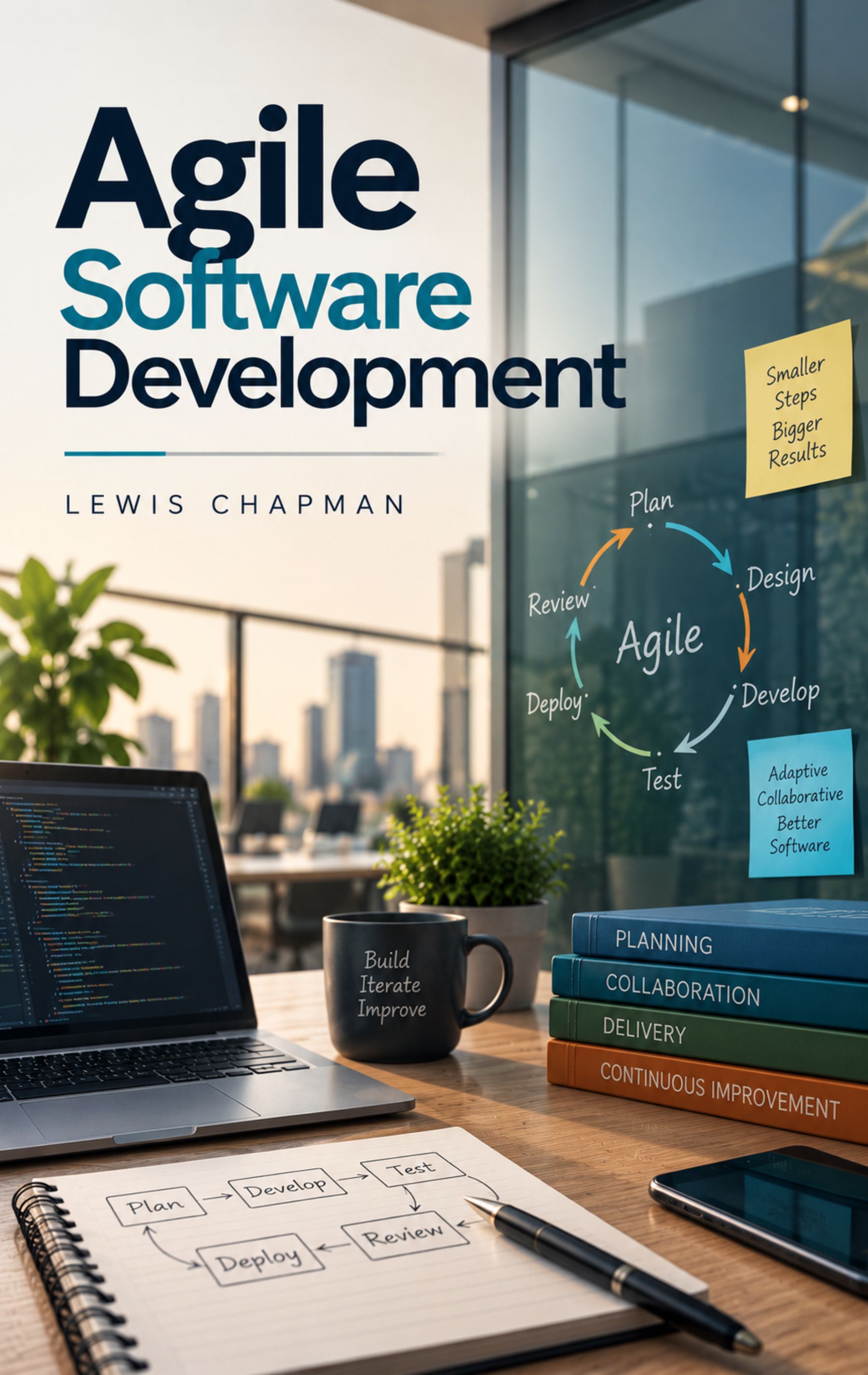
Agile Software Development is not written just as a technical manual; it is a foundational manifesto for the modern programmer. The book operates on the premise that true business agility is impossible if your codebase is brittle, tangled, and terrified of change. The book discusses SOLID design principles, which serve as the definitive checklist for building robust object-oriented software. These are; Single Responsibility Principle (SRP): A class should have one, and only one, reason to change.; Open/Closed Principle (OCP): Software entities should be open for extension but closed for modification; Liskov Substitution Principle (LSP): Subtypes must be substitutable for their base types without breaking the program; Interface Segregation Principle (ISP): Clients should not be forced to depend on interfaces they do not use. Dependency Inversion Principle (DIP): High-level modules should not depend on low-level modules; both should depend on abstractions. The true power of Agile Software Development lies in its unapologetic pragmatism. It refuses to look at software development through rose-colored glasses. The book is filled with comprehensive, messy, real-world case studies in Java and C++. It shows you bad, sprawling code first—the kind we are all guilty of writing—and then meticulously walks you through the transformation, refactoring it step-by-step into elegant, flexible, and beautifully expressive code. The book leaves you with a profound philosophical realization: Agility is an act of professional conduct, not a project management tool. If you cannot change your code safely, quickly, and confidently, your team is not Agile—no matter how many sticky notes are on your whiteboard. It teaches developers to view themselves not as assembly-line workers, but as craftsmen and caretakers of living systems.
In his definitive work, Agile Software Development, Lewis Chapman delivers a powerful, pragmatic roadmap for navigating the complexities of modern software delivery. Recognizing that the tech industry has permanently moved past the era of rigid, linear waterfall development, this book provides an indispensable architecture guide for both university students and veteran enterprise engineers. Rather than focusing solely on rigid rules, Chapman deconstructs the core values of the Agile Manifesto and translates them into actionable engineering practices. The book seamlessly maps out the theoretical foundations of iterative design while exploring modern, real-world implementations. Lewis Chapman is a software engineering professional, educator, and author whose career spans multiple facets of modern application development, software design, and DevOps practices. Combining profound academic insight with practical, real-world industry experience, Chapman has established himself as a trusted voice in bridging the gap between complex computer science theories and the fluid dynamics of engineering high-performing agile teams. His qualifications for authoring text on modern agile methodologies stem from an extensive background in the complete Application Development Lifecycle (SDLC), advanced systems architecture, and modern delivery frameworks. Armed with a strong engineering and analytical foundation, Chapman has earned prominent academic distinctions for outstanding performance in metallurgy and material science metrics at the University of Sheffield, showcasing his multi-disciplinary engineering excellence.
Preface Chapter 1. Foundations of Agile Software Development Evolution of Software Development Methodologies Limitations of Traditional Software Models Agile Manifesto and Core Values Agile Principles and Philosophy Agile Mindset and Cultural Change Comparison of Agile and Plan-Driven Approaches Benefits and Challenges of Agile Adoption Agile in Contemporary Software Engineering Chapter 2. Agile Process Models and Frameworks Overview of Agile Process Models Scrum Framework and Practices Extreme Programming (XP) Kanban Methodology Lean Software Development Feature-Driven Development Crystal Methods Hybrid and Scaled Agile Models Chapter 3. Roles, Teams, and Collaboration in Agile Agile Team Structures Product Owner Responsibilities Scrum Master and Agile Coach Development Team Dynamics Stakeholder Involvement Communication and Collaboration Techniques Distributed and Remote Agile Teams Building High-Performance Agile Teams Chapter 4. Agile Requirements Engineering Agile Approach to Requirements User Stories and Story Mapping Product Backlog Management Prioritization Techniques Acceptance Criteria and Definition of Done Managing Changing Requirements Estimation Techniques in Agile Traceability and Documentation Chapter 5. Agile Planning and Project Management Agile Project Lifecycle Release and Iteration Planning Sprint Planning and Execution Velocity and Burndown Charts Risk Management in Agile Projects Agile Cost and Schedule Estimation Tools for Agile Project Management Governance and Compliance in Agile Chapter 6. Agile Development Practices Test-Driven Development Continuous Integration and Delivery Refactoring and Code Quality Pair Programming and Collective Ownership Agile Testing Strategies DevOps and Agile Integration Technical Debt Management Best Practices in Agile Development Chapter 7. Scaling Agile for Large Organizations Need for Scaling Agile Scaled Agile Framework (SAFe) Large-Scale Scrum (LeSS) Disciplined Agile Delivery Coordination across Multiple Teams Portfolio Management in Agile Organizational Transformation Challenges Measuring Success in Scaled Agile Chapter 8. Agile Tools, Metrics, and Documentation Agile Software Tools Overview Metrics for Agile Performance Monitoring Progress and Productivity Documentation in Agile Environments Quality Assurance Metrics Agile Reporting Techniques Tool Integration and Automation Data-Driven Decision Making Chapter 9. Agile Governance, Ethics, and Quality Agile Governance Models Regulatory and Compliance Issues Ethical Considerations in Agile Projects Quality Assurance in Agile Risk and Security Management Auditing Agile Projects Contract Management and Agile Sustainability and Long-Term Quality Bibliography Index

$280.00