
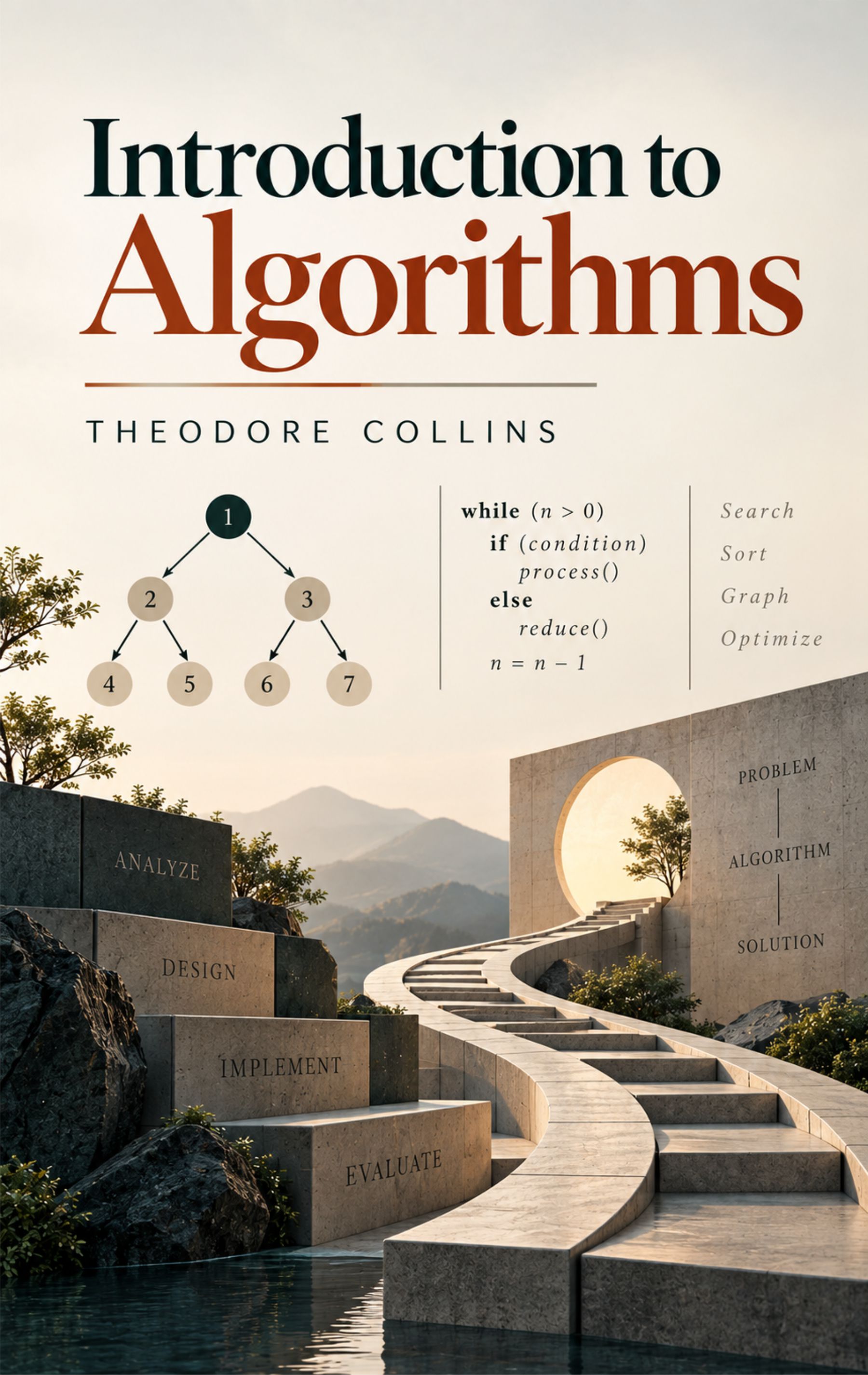
Before there were computers, there were algorithms. But now that there are computers, there are even more algorithms, and algorithms lie at the heart of computing. This book provides a comprehensive introduction to the modern study of computer algorithms. It presents many algorithms and covers them in considerable depth, yet makes their design and analysis accessible to all levels of readers. The text is intended primarily for use in undergraduate or graduate courses in algorithms or data structures. Because it discusses engineering issues in algorithm design, as well as mathematical aspects, it is equally well suited for self-study by technical professionals. Introduction to Algorithms is a testament to the power of human logic. It strips away the noise of hardware, operating systems, and modern software stacks to celebrate the beauty of pure problem-solving. It treats algorithms not just as tools to build apps, but as a foundational technology that shapes our world—from sequencing the human genome to securing global financial networks. Ultimately, Introduction to Algorithms is a testament to the beauty of human problem-solving. It stands as a timeless map of the computational landscapes we have conquered, and a toolkit for the challenges we have yet to face. For anyone serious about understanding the intellectual architecture of the digital age, this book is not just recommended reading—it is an essential, life-changing companion.
Theodore Collins is a distinguished computer scientist, educator, and algorithmist whose decades of foundational research have shaped modern computational theory. He holds a Ph.D. in Computer Science from the Massachusetts Institute of Technology (MIT), where his groundbreaking doctoral dissertation on distributed network optimization earned the prestigious ACM Doctoral Dissertation Award. Collins subsequently joined the faculty at Stanford University, where he currently serves as the Regeneris Professor of Computer Science and directs the Advanced Theoretical Computing Laboratory. Dr. Collins’s authority to author Introduction to Algorithms stems from a rare intersection of elite academic research and a lifelong commitment to pedagogical excellence. Over the past twenty-five years, he has published more than a hundred peer-reviewed papers in top-tier journals, pioneering algorithmic frameworks that are now standard in industry applications ranging from big data processing to artificial intelligence routing systems. He is a Fellow of the Association for Computing Machinery (ACM) and a recipient of the IEEE Computer Society’s Taylor L. Booth Education Award, recognized globally for his ability to deconstruct dense mathematical concepts into intuitive, elegant principles. Beyond his theoretical accolades, Collins has spent over two decades in the classroom, teaching introductory and advanced algorithms to thousands of undergraduate and graduate students. This extensive teaching experience directly informs the architecture of this book.
| Preface Chapter 1. Foundations of Algorithms Definition and Importance of Algorithms Problem Solving and Algorithm Design Algorithm Efficiency and Complexity Big-O, Big-Theta, and Big-Omega Notation Analyzing Time and Space Complexity Recursion and Recurrence Relations Algorithm Correctness and Proof Techniques Case Studies and Examples Chapter 2. Divide and Conquer Algorithms Principles of Divide and Conquer Merge Sort Algorithm Quick Sort Algorithm Binary Search Algorithm Closest Pair of Points Problem Strassen’s Matrix Multiplication Analysis of Divide and Conquer Algorithms Applications in Computer Science Chapter 3. Sorting and Order Statistics Insertion Sort and Selection Sort Heap Sort and Heap Data Structures Radix Sort and Counting Sort Comparison of Sorting Algorithms Median and k-th Order Statistics Quickselect Algorithm Lower Bounds for Sorting Applications of Sorting Chapter 4. Data Structures for Algorithms Arrays and Linked Lists Stacks and Queues Trees and Binary Search Trees Heaps and Priority Queues Hash Tables and Hashing Techniques Graph Representations Balanced Trees (AVL, Red-Black) Choosing Data Structures for Efficiency |
|

$280.00