
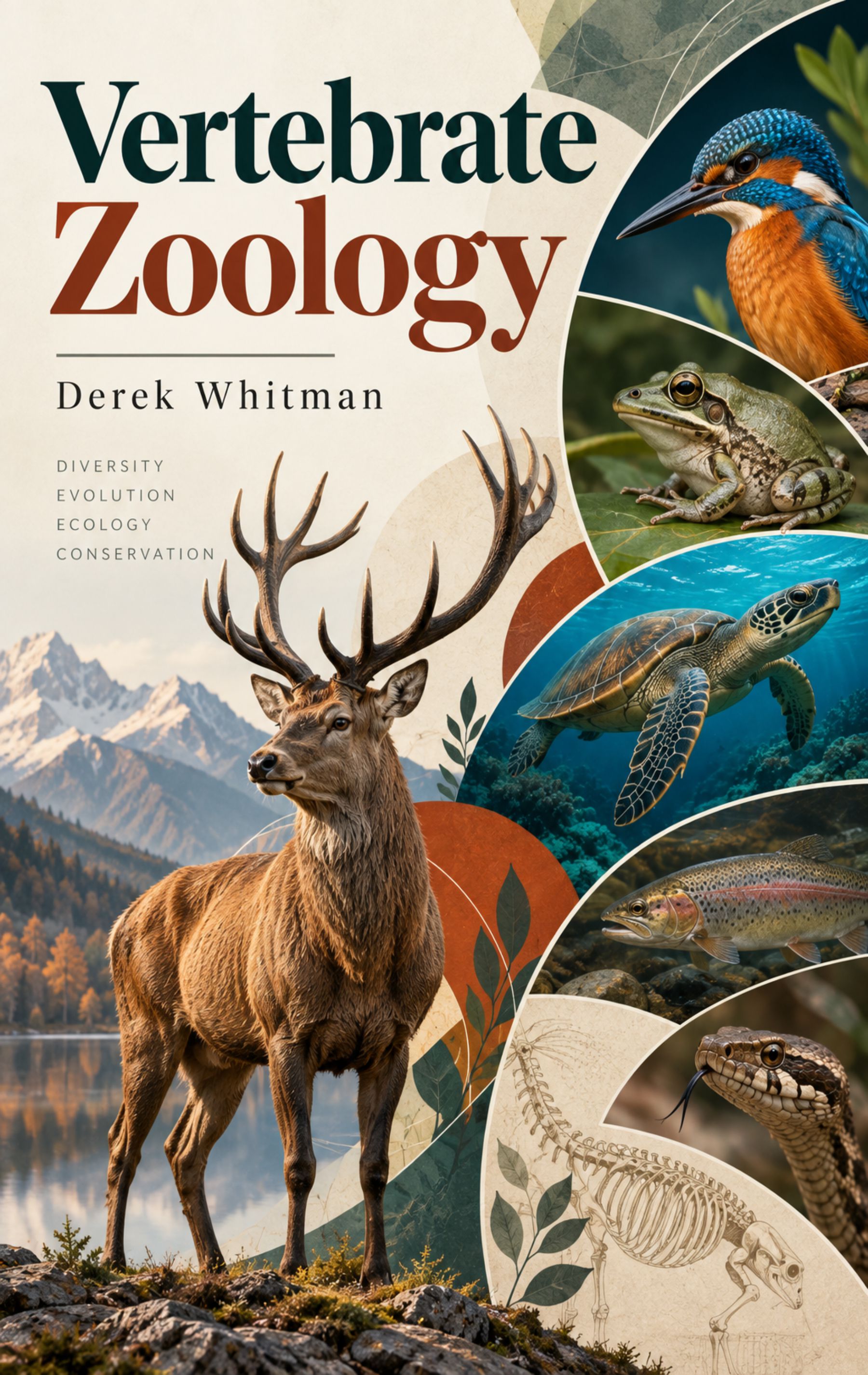
Vertebrate Zoology stands as the definitive, masterclass guide to understanding the complex evolutionary journey, anatomical brilliance, and ecological triumph of backboned animals. This comprehensive text bridges the gap between deep evolutionary history and modern physiological science, offering students, researchers, and wildlife enthusiasts an unyielding look into the world of vertebrates. Spanning from the earliest, jawless chordates filtering nutrients in prehistoric seas to the highly sophisticated cognitive structures of apex mammals, this book unpacks the blueprints of life. It details how nature solved the monumental challenges of survival, transitioning from water to land, developing specialized respiratory systems, engineering flight, and mastering thermoregulation. This book tracks the structural transformations and ancestral milestones that shaped modern fish, amphibians, reptiles, birds, and mammals. Offers detailed, high-fidelity breakdowns of skeletal, nervous, and circulatory systems across classes, highlighting nature’s adaptations. Explores how vertebrates interact with, shape, and are shaped by their changing environments. Integrates traditional morphology with the latest breakthroughs in molecular phylogenetics and conservation biology. Whether you are preparing for rigorous academic examinations, building a foundational library in biological sciences, or seeking to understand the intricate machinery of the animal kingdom, Vertebrate Zoology delivers absolute clarity and unparalleled depth. It is not just a textbook; it is a profound testament to the grand design of evolutionary adaptation.
Derek Whitman is an esteemed evolutionary biologist, comparative anatomist, and educator who has spent over three decades decoding the complexities of the animal kingdom. He holds a Phineas P. Covington Chair of Evolutionary Biology at the Institute for Advanced Zoological Studies, where his groundbreaking research on neural crest development in early vertebrates has redefined modern understandings of macroevolution. Dr. Whitman’s academic journey began at the University of Cambridge, where he graduated with highest honors in Zoology. He later earned his Ph.D. in Comparative Vertebrate Morphology from Harvard University, focusing on the transitional biomechanics of Devonian tetrapods. His post-doctoral fellowships took him from the remote archipelagos of Indonesia to the deep-sea hydrothermal vents of the Pacific, synthesizing fieldwork with cutting-edge genomic sequencing. A recipient of the prestigious Linnean Medal and a fellow of the Royal Society, Dr. Whitman has published over two hundred peer-reviewed papers and served as the editor-in-chief of the Journal of Vertebrate Systematics. Beyond the laboratory, Dr. Whitman is a legendary educator known for his ability to transform dense anatomical data into captivating narratives of survival and adaptation. In this definitive edition of Vertebrate Zoology, he distills a lifetime of field exploration, dissection, and academic rigor into a comprehensive masterwork. Designed to challenge and inspire the next generation of scientists, this textbook reflects Dr. Whitman’s profound belief that to understand the intricacies of vertebrate life is to understand the very history of our own existence.
| Preface Chapter 1. Introduction to Vertebrate Zoology Scope and Significance of Vertebrate Zoology Historical Development of Vertebrate Studies Major Characteristics of Vertebrates Evolutionary Origins of Vertebrates Principles of Classification and Nomenclature Comparative Approach in Vertebrate Zoology Vertebrates in Ecosystems and Biodiversity Modern Trends and Research Tools Chapter 2. Origin and Evolution of Vertebrates Chordate Ancestry and Early Vertebrate Evolution Fossil Record of Early Vertebrates Adaptive Radiation in Vertebrate Lineages Evolution of the Vertebral Column Development of Jaws and Paired Appendages Transition from Aquatic to Terrestrial Life Mass Extinctions and Vertebrate Diversification Molecular Perspectives on Vertebrate Evolution Chapter 3. Agnatha: Jawless Vertebrates General Characteristics of Agnathans Classification of Cyclostomes External Morphology of Lampreys and Hagfishes Digestive and Respiratory Systems Circulatory and Excretory Systems Nervous and Sensory Organs Reproduction and Development Evolutionary Significance of Jawless Vertebrates Chapter 4. Chondrichthyes: Cartilaginous Fishes Diagnostic Features of Chondrichthyes Classification of Sharks, Rays, and Skates Skeletal and Muscular Systems Digestive and Respiratory Adaptations Circulatory and Osmoregulatory Mechanisms Nervous System and Sense Organs Reproductive Biology and Development Ecological Role and Conservation Issues Chapter 5. Osteichthyes: Bony Fishes General Characteristics of Bony Fishes Classification of Actinopterygii and Sarcopterygii Integumentary and Skeletal Systems Digestive and Respiratory Physiology Circulation and Excretion Nervous System and Sensory Adaptations Reproductive Strategies and Life Cycles Economic Importance and Fisheries Biology |
|

$280.00