
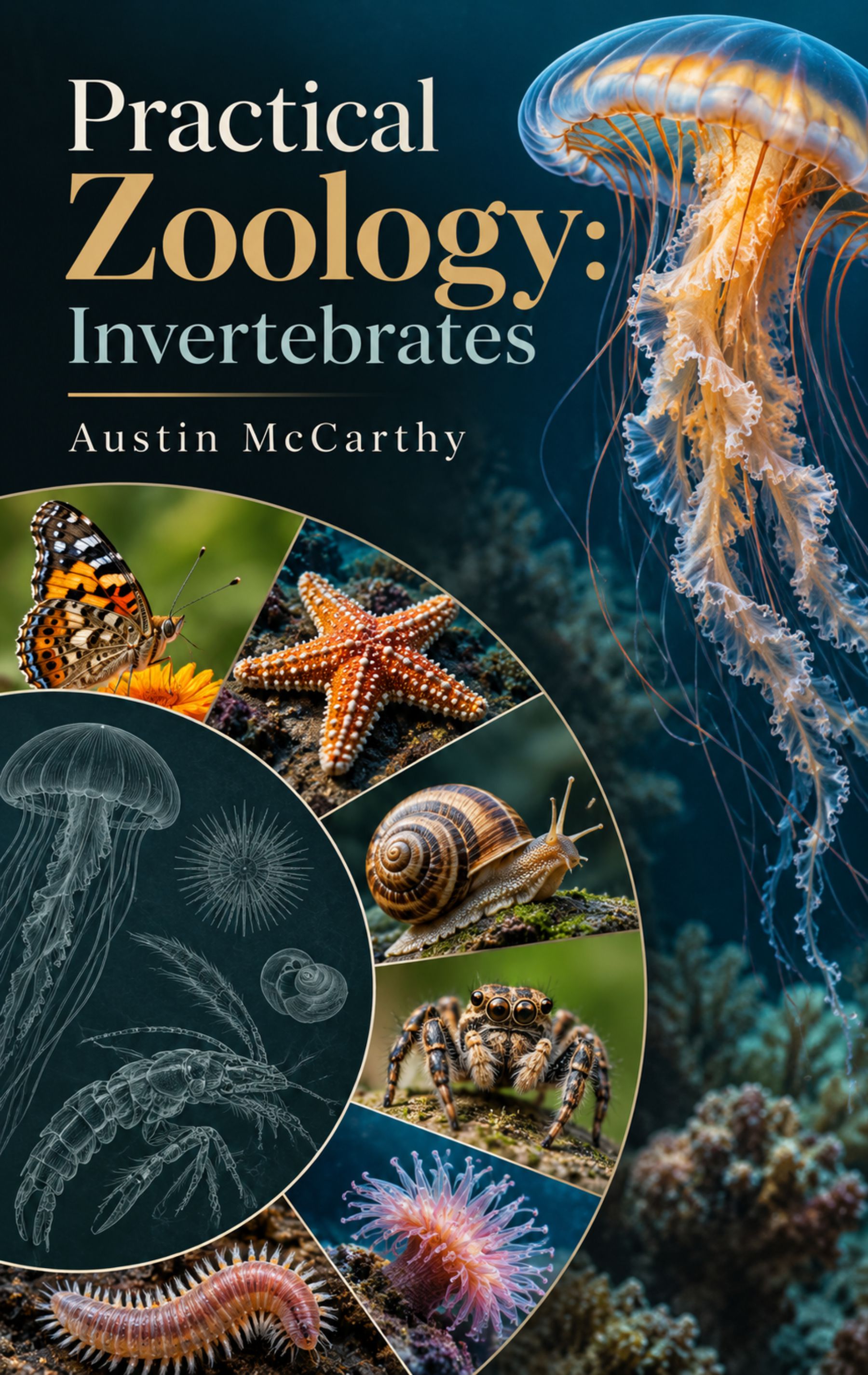
Practical Zoology: Invertebrates serves as the definitive, definitive roadmap for exploring the complex, microscopic, and fascinating world of non-backboned organisms. This comprehensive text bridges the gap between theoretical classroom lectures and hands-on laboratory exploration, making it an indispensable companion for biology students, researchers, and educators alike. Structured with immaculate attention to detail, the book systematically guides readers through the diverse phyla of the invertebrate kingdom from the simplest single-celled protozoans to the highly evolved and complex echinoderms and arthropods. Each chapter is designed to build a profound understanding of animal architecture, evolutionary adaptations, and ecological significance. This book features highly detailed, hand-drawn, and labeled illustrations that bring microscopic structures and internal anatomies to life, ensuring precision during laboratory dissections and observations. Provides clear, methodical instructions for culture preparation, mounting, staining, and dissecting various invertebrate specimens safely and effectively. Highlights the structural and functional evolutionary milestones that allowed invertebrates to conquer almost every habitat on Earth. Offers updated classification schemes and diagnostic features for every major and minor phylum, helping students easily identify and categorize specimens. Practical Zoology: Invertebrates is an invitation to look closer at the hidden wonders of the natural world. It equips aspiring zoologists with the critical observation skills, technical expertise, and analytical mindset required to excel in the biological sciences.
Austin McCarthy, PhD, FLS, is a distinguished evolutionary biologist, field zoologist, and educator who has dedicated over three decades to unearthing the mysteries of the invertebrate world. Dr. McCarthy earned his Bachelor of Science in Biology with First-Class Honours from the University of Washington, where his early research on marine polychaetes garnered national undergraduate recognition. He subsequently moved to the United Kingdom to pursue his Doctorate in Invertebrate Zoology at the University of Oxford, focusing on the functional morphology and evolutionary transitions of terrestrial arthropods. His seminal doctoral thesis on the micro-anatomical adaptations of subterranean arachnids remains a highly cited work in evolutionary biology. Upon completing his post-doctoral fellowship at the Smithsonian Institution, Dr. McCarthy joined the faculty at the prestigious Institute of Advanced Zoological Studies. Over his tenure as Professor Emeritus of Invertebrate Taxonomy, he has mentored generations of undergraduate and postgraduate students. His teaching philosophy balances rigorous academic theory with immersive, hands-on laboratory exploration—a methodology that serves as the absolute backbone of Practical Zoology: Invertebrates. Beyond the lecture hall, Dr. McCarthy is a seasoned field explorer. He has led over twenty major scientific expeditions funded by the National Science Foundation and the National Geographic Society, navigating environments ranging from the dense rainforests of Madagascar to the hydrothermal vents of the Galápagos Rift. His fieldwork has resulted in the classification of over forty previously unknown invertebrate species, including a rare genus of deep-sea isopods named Bathynomus mccarthyi in his honour.
| Preface Chapter 1. Introduction to Practical Zoology Objectives and Scope of Practical Zoology Laboratory Safety and Ethical Considerations Instruments and Equipment in Zoological Studies Preservation and Fixation Techniques Dissection Methods and Handling of Specimens Microscopy and Micrometric Measurements Scientific Drawing and Record Maintenance Applications of Practical Zoology Chapter 2. Protozoa Classification and Diagnostic Characters Laboratory Study of Amoeba Structure and Locomotion in Paramecium Nutrition and Reproduction in Protozoans Encystment and Life Cycle Patterns Parasitic Protozoa and Laboratory Identification Staining Techniques for Protozoa Medical and Ecological Importance Chapter 3. Porifera and Coelenterata Diagnostic Characters and Classification Laboratory Study of Sycon Canal System and Skeletal Elements Structure of Hydra Body Wall and Nematocysts Reproduction and Developmental Stages Identification of Representative Specimens Practical Significance and Applications Chapter 4. Platyhelminthes and Nemathelminthes General Characteristics and Classification Laboratory Study of Planaria Parasitic Adaptations in Flatworms Structure of Ascaris Digestive and Reproductive Systems Life Cycles of Parasitic Forms Slide Preparation and Identification Economic and Health Importance |
Chapter 5. Annelida Diagnostic Features and Classification Laboratory Study of Earthworm External Morphology and Segmentation Digestive and Circulatory Systems Excretory and Nervous Systems Reproductive Organs and Development Dissection Techniques and Observations Ecological and Agricultural Importance Chapter 6. Arthropoda General Characteristics and Classification Laboratory Study of Cockroach External Morphology and Appendages Digestive, Respiratory, and Circulatory Systems Chapter 7. Mollusca Diagnostic Characters and Classification Laboratory Study of Pila Shell Structure and Mantle Digestive and Respiratory Systems Circulatory and Excretory Organs Chapter 8. Echinodermata General Characteristics and Classification Laboratory Study of Starfish Endoskeleton and Body Symmetry Water Vascular System Digestive and Respiratory Structures Bibliography Index |

$280.00