
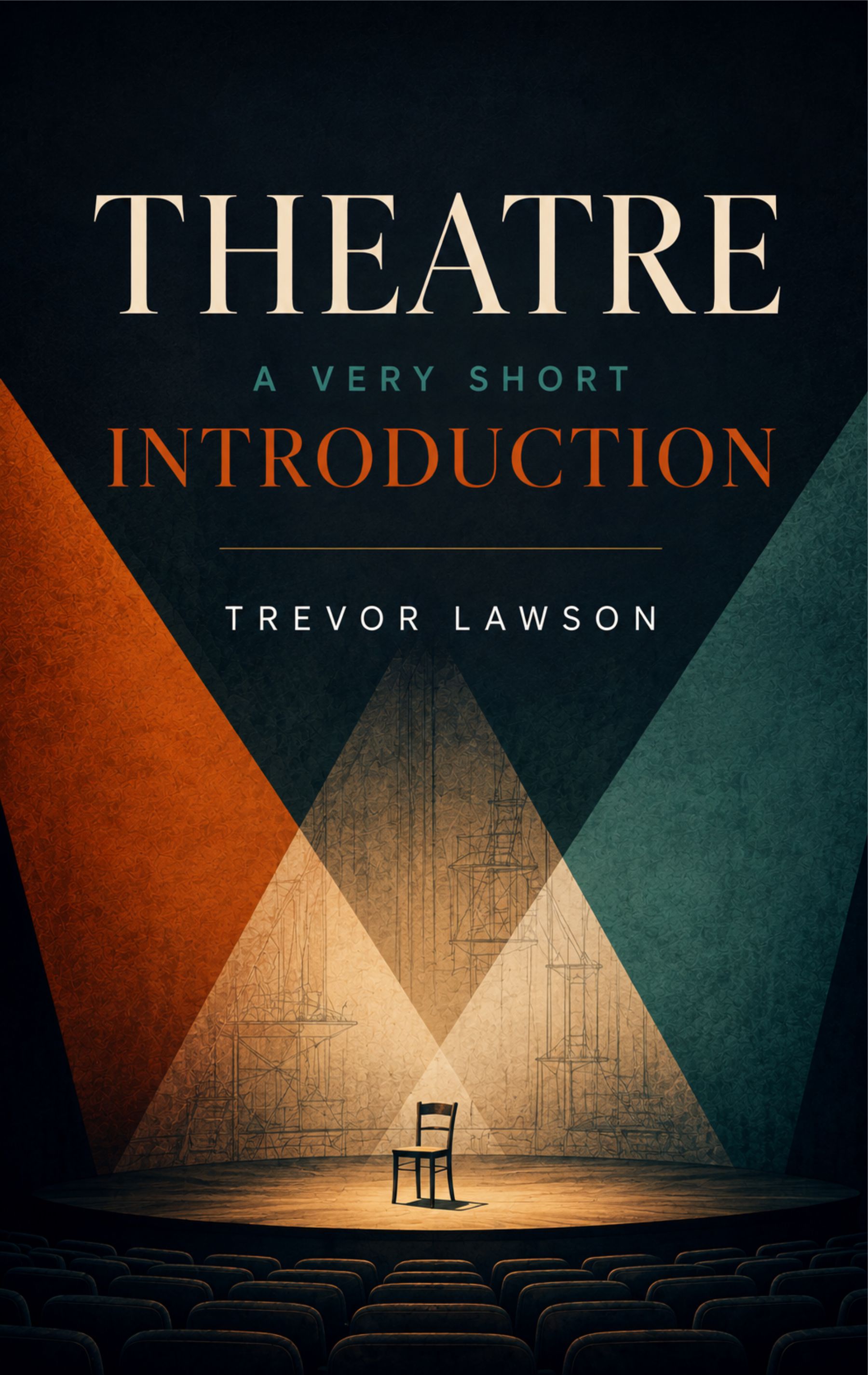
Theatre: A Very Short Introduction by Trevor Lawson is a sharp, fiercely precise dissection of an art form that has refused to die for thousands of years. It is a brilliant, concentrated strike against the modern misconception that theatre is a dusty, polite relic of the past. “Theatre is not a museum piece; it is an act of cultural warfare. Trevor Lawson traps the chaotic, volatile essence of the stage and condenses it into a powerful, pocketsized manifesto. He traces the roots of performance from ancient ritualistic bloodlines to the radical, rulebreaking avantgarde movements of today. This book reminds us that theatre is the most dangerous art form in existence because it requires living, breathing bodies to assemble in a single room and confront uncomfortable truths. In an age dominated by sterile digital screens and curated algorithms, Carlson champions the raw, unedited fury of the live experience.
Trevor Lawson is a worldrenowned theatrical architect, scenographer, and spatial theorist whose visionary designs have reshaped modern performance environments. After earning his Master of Architecture from the Yale School of Drama, Lawson spent three decades designing awardwinning, boundary pushing cultural institutions across six continents. He currently serves as the Chair of Spatial Dynamics at the Royal Academy of Dramatic Arts in London. In Theater Area, Lawson synthesizes a lifetime of practical expertise and academic rigor into the definitive guide to performance architecture. He masterfully guides readers through the historical evolution of theater spaces, tracking how human storytelling shaped and was shaped by the physical world. From the strict sightlines of the traditional proscenium stage to the intimate, communal dynamics of thrust and arena stages, Lawson deconstructs how structural geometry dictates emotional impact.
Preface Chapter 1. What Is Theatre Defining Theatre and Performance Theatre as Art and Social Practice Elements of Drama and Spectacle Performer, Text, and Audience Ritual and Play Live Presence and Liveness Theatre and Everyday Life Key Terms and Concepts Chapter 2. Origins of Theatre Ritual, Festival, and Community Classical Greek Theatre Roman Performance Traditions Asian Classical Theatres Medieval European Drama Performance in Religious Contexts Early Stage Conventions Transmission of Theatrical Traditions Chapter 3. Text and Performance Drama as Literature Script and Interpretation Adaptation and Translation Improvisation and Devised Theatre Narrative Structures Dialogue and Monologue The Role of the Playwright From Page to Stage Chapter 4. Acting and the Performer The Art of Acting Classical Acting Traditions Stanislavski and Modern Acting Systems Physical and Vocal Training Ensemble and Collaboration Character and Representation The Star System Ethics of Performance Chapter 5. Staging and Design Stage Types and Spaces Scenography and Visual Composition Lighting and Sound Costume and Makeup Props and Stage Properties Technology and Multimedia Director’s Vision Audience Perspective and Reception Chapter 6. Theatre and Society Theatre and Politics Censorship and Freedom of Expression Theatre for Social Change Community and Applied Theatre Gender and Performance Race and Representation National Identity and Culture Theatre and Education Chapter 7. Modern and Contemporary Theatre Realism and Naturalism Modernist Experimentation Epic Theatre and Political Stages Theatre of the Absurd Postmodern Performance Digital and Multimedia Theatre Global and Intercultural Theatre New Writing and Emerging Voices Chapter 8. Audiences and Reception The Role of the Spectator Audience Engagement and Participation Critical Approaches Performance Theory Reception Studies Theatre Criticism Popular and Commercial Theatre Festivals and Cultural Events Chapter 9. Business of Theatre Production and Funding Theatre Institutions and Companies Marketing and Publicity Touring and International Exchange Copyright and Legal Issues Professional Training and Careers Nonprofit and Commercial Models Sustainability in Theatre Practice Chapter 10. Why Theatre Matters Theatre as Cultural Memory Emotional and Intellectual Impact Theatre in the Digital Age Interdisciplinary Connections Preservation and Archiving Future Directions Theatre in a Globalized World Concluding Reflections Bibliography Index

$280.00