
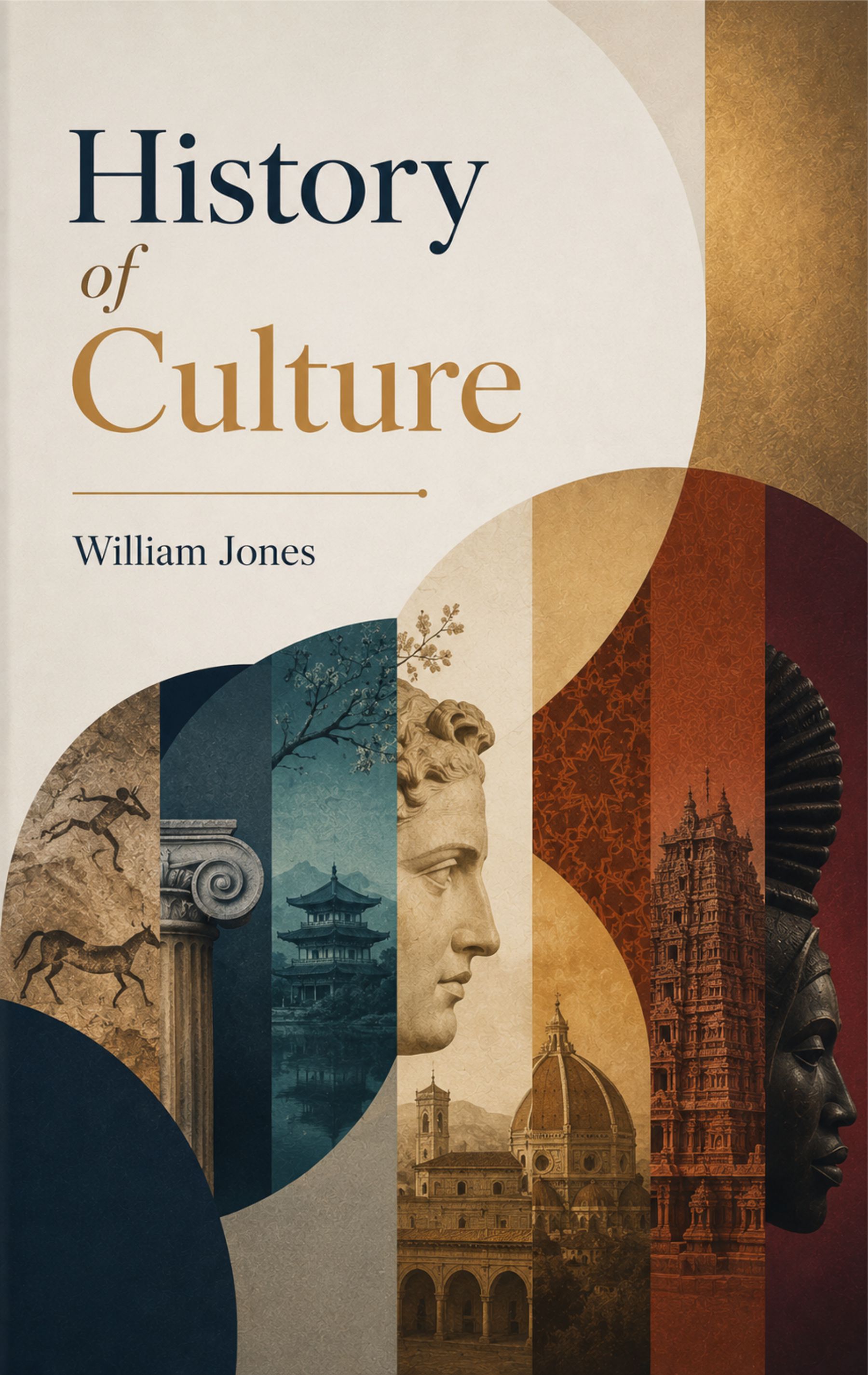
The History of Culture is a sweeping journey through human creativity, beliefs, and societal evolution. It explores how art, language, philosophy, and everyday traditions shape who we are and define our shared human experience. History of Culture is a sweeping, cinematic exploration of human civilization that brings the past to life not through the dates of battles, but through the soul of humanity itself. This book is a profound journey into the ideas, art, beliefs, and traditions that have shaped who we are today. From the first strokes of charcoal on cave walls to the complex digital landscapes of the modern era, History of Culture reveals how human creativity and resilience have continuously redefined the world. It bridges the gap between ancient philosophy and contemporary identity, offering readers a vibrant tapestry of our shared global heritage. It is more than just a historical record; it is an intimate look at the collective imagination that has driven human progress across centuries.
William Jones is a distinguished cultural historian, anthropologist, and professor whose life work has centered on the evolution of human societies. He holds a Ph.D. in Cultural Anthropology from Oxford University, where his ground breaking doctoral thesis on the crosscontinental migration of oral traditions earned the prestigious Lord Acton History Prize. With over two decades of field experience, Dr. Jones has led numerous archaeological and ethnographic expeditions across the Mediterranean, the Silk Road, and Mesoamerica. His research focuses on how ancient trade routes facilitated not just economic exchange, but the deepseated blending of art, language, and spiritual rituals.
Preface Chapter 1. Defining Cultural History Cultural History as Distinct Historical Subdiscipline Annales School and History of Mentalities Cultural History and Poststructuralist Theory History of the Body and Sensory Experience Transnational and Global Cultural History Cultural History of Science and Knowledge Cultural History and Translation Studies Visual and Material Culture Integration Chapter 2. Origins of Human Culture Defining Culture in Human Evolutionary Context Middle Paleolithic and Neanderthal Culture Subsistence Strategies and Food Acquisition Neanderthal Extinction and Modern Human Expansion Paleoindian Settlement of Americas Chapter 3. Ancient Cultural Traditions Oral Traditions and Storytelling in Ancient Societies Social Structure and Hierarchical Organization Mythological Systems and Cosmological Trade Networks and Cultural Exchange Festivals and Public Celebrations Philosophy and Ethical Thought Material Culture and Daily Life Chapter 4. Classical Civilizations and Culture Defining Classical Civilization in World History Greek Philosophy and the Search for Wisdom Roman Law and the Development of Legal Systems Legalism and the Theory of State Power Spread of Buddhism across Asia Chapter 5. Medieval Cultural World Foundations of Medieval Culture Scholasticism and Medieval Thought Medieval Philosophy and Theology Medieval Women and Gender Roles Medieval Popular Religion and Piety Medieval Heresy and Religious Dissent Medieval Scandinavia and Viking Culture Chapter 6. Renaissance Cultural Revival Defining the Renaissance Cultural Revival Civic Humanism and Political Thought Neoplatonism and Renaissance Philosophy Renaissance and Exploration Renaissance and Religious Transformation Renaissance Political Thought Renaissance Art Theory and Aesthetics Renaissance and Dance Chapter 7. Enlightenment Cultural Shifts Enlightenment as Cultural Transformation Rise of Political Economy Enlightenment and the Arts Travel Literature and Cultural Encounter Enlightenment and Everyday Life Enlightenment Legacy in Modern Culture Chapter 8. Romanticism and Emotion Revolt against Enlightenment Rationalism Nature as Source of Spiritual Experience Romantic Painting and the Visual Arts Romanticism and National Identity Gothic Novel and Literature of Terror Romanticism and the Supernatural Walt Whitman and Emily Dickinson Chapter 9. Industrial Age Culture Industrial Age Cultural Transformation Factory System and Work Culture Religion and Secularization Trends Mass Media and Information Revolution Gender Roles and Women’s Movement Technological Utopianism and Progress Faith Evolutionary Theory and Social Thought Architecture and Industrial Materials Museums and Public Culture Childhood and Education Reform Social Reform and Progressive Movement Urban Planning and Reform Gender and Separate Spheres Ideology Public Health and Life Expectancy Music Hall and Popular Entertainment I

$280.00