
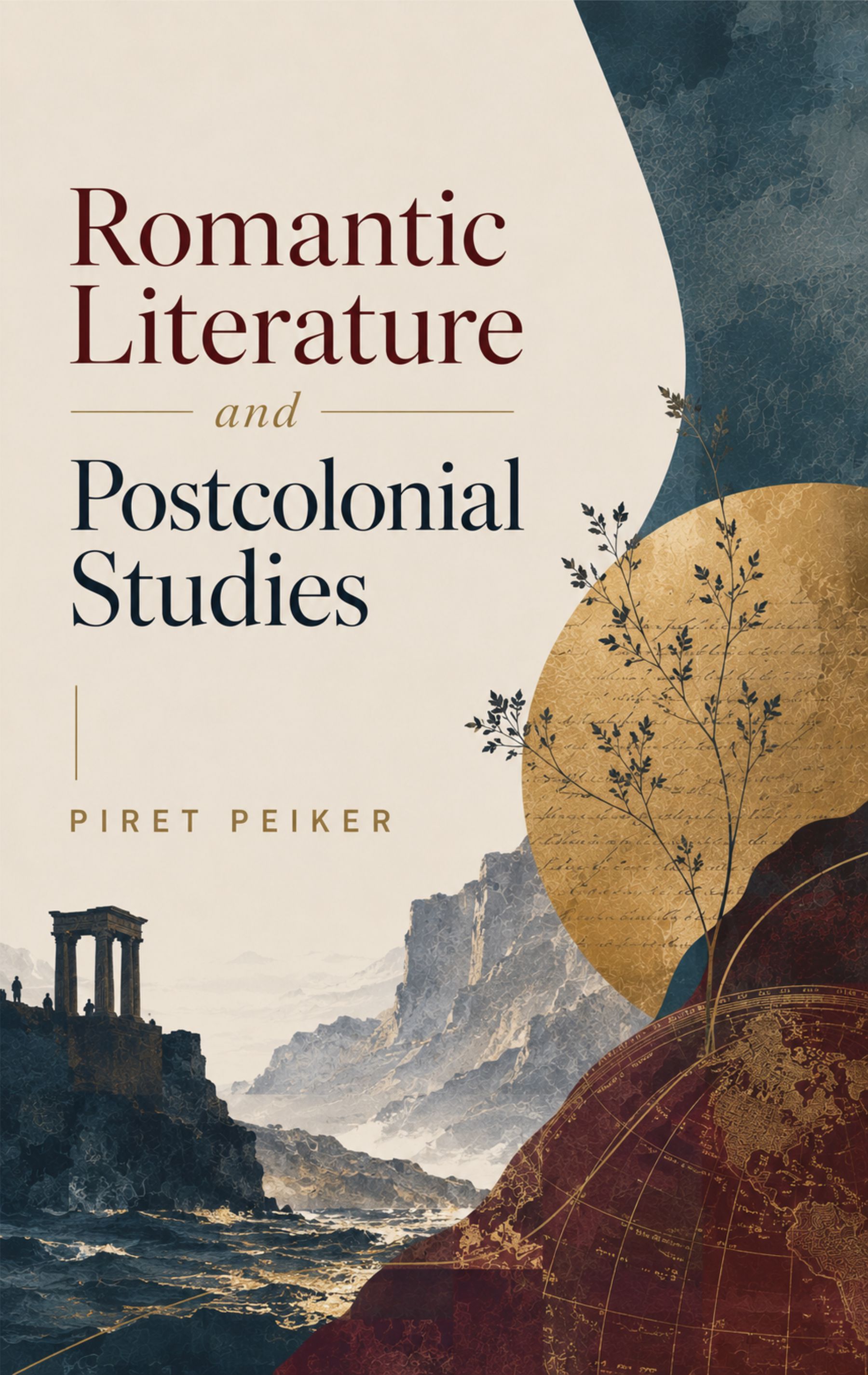
Romantic Literature and Postcolonial Studies is a compelling examination of how canonical British Romantic writing was deeply intertwined with the expanding British Empire. It powerfully reveals how the era's literature, travel writing, and poetry both constructed and contested imperial ideologies. Understanding the historical realities of the colonial era (1787-1833) is crucial to seeing how the European pursuit of empire shaped this foundational body of literature. The book offers a paradigm shift in how we read works by authors such as Wordsworth, Austen, and Blake. It highlights the ways the exploding print market fed a public eager to learn about the globe. Poetry and exploration/travel narratives went hand-in-hand, shaping domestic British consciousness. The text investigates how exoticism and Orientalism were used as ideological tools, while also showing how texts not overtly about the "exotic" (like Austen's novels) grapple with the problematic nature of empire. It broadens the traditional canon to include travel writing, political prose, and slave narratives, giving voice to those oppressed by the colonial machine. Romantic Literature and Postcolonial Studies bridges the gap between historical British Romanticism and the enduring legacy of global colonialism. This volume details how the aesthetics of the Romantic era both resisted and reinforced imperial expansion.
Piret Peiker is an esteemed literary scholar and translator specializing in postcolonial theory, literary modernity, and comparative genre studies. She is known for analyzing texts through a post-Soviet and comparative lens, bridging Western postcolonial paradigms with the historical realities of Eastern Europe. Through her academic exploration, scholar Piret Peiker envisions Romanticism not merely as a European aesthetic movement, but as a complex crucible where the modern national consciousness and the colonial imagination were forged. When looking at Romantic Literature and Postcolonial Studies, she emphasizes how the era's focus on individualism, the sublime, and national identity holds profound resonance for formerly colonized or occupied nations. Peiker delves into how 19th-century Romantic nationalism-heavily influenced by German Romantic ideals-was often adopted by indigenous and oppressed cultures to build a collective sense of nationhood, as seen in historical awakenings. In her analytical works, she highlights how Romantic literature simultaneously romanticized "the exotic" while constructing the concept of "Otherness," creating imaginary geographies that justified imperial expansion. Peiker's scholarship on the Bildungsroman (the novel of formation) examines how marginalized cultures adapt this genre to narrate their own struggles with modernization, decolonization, and survival. Peiker's critical methodology underscores that to truly understand the dynamics of empire, one must revisit the Romantic poets and novelists. By applying postcolonial criticism to this period, she exposes the subtle ways literature played a crucial role in constructing, challenging, and ultimately dismantling the modern culture of empire.
Preface 1. Introduction 2. Romantic Geographies 3. Slavery and the Romantic Imagination 4. Scottish Romantic Literature and Postcolonial Studies 5. Romantic Orientalisms 6. Romantic Readers and Writers, Selves and Others 7. Colonialism, Postcoloniality, Postcolonialism 8. Nation 9. Gender 10. Queer Bibliography Index

$280.00