
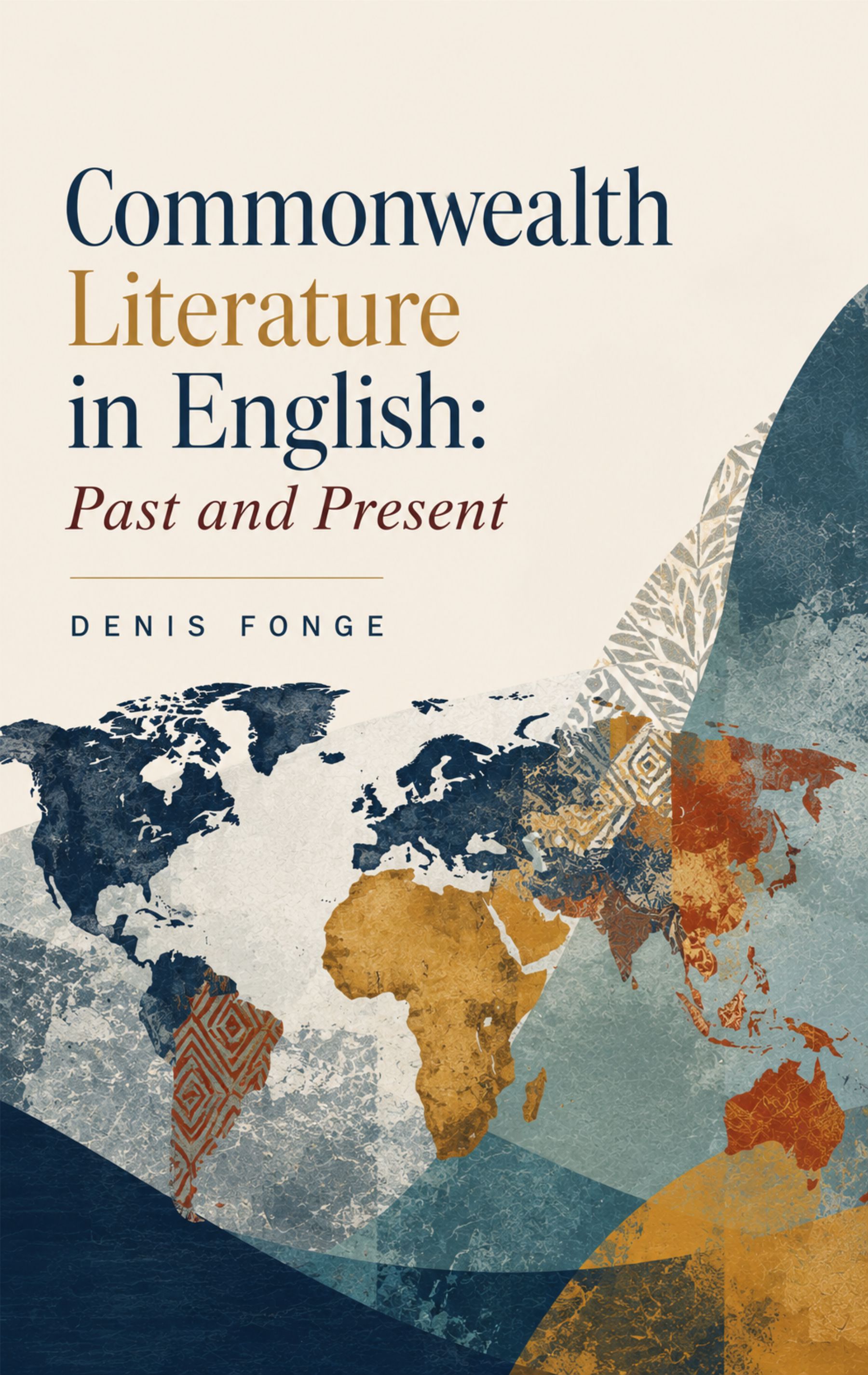
Commonwealth Literature in English: Past & Present offers a definitive, panoramic exploration of the vibrant literary landscapes shaped by the legacy of the British Empire. Spanning continents and generations, this comprehensive volume investigates how writers from former colonies have reclaimed, reshaped, and repurposed the English language to articulate their unique historical realities and cultural identities. From the deeply rooted theoretical underpinnings of the discipline to precise critical examinations of landmark regional texts, this book serves as an indispensable guide for students, scholars, and avid readers of global literature. It bridges the gap between historical trauma and contemporary creative resistance, offering a profound understanding of how diverse nations have navigated the journey from colonial subjugation to independent self-actualization. This book unpacks the fundamental conceptual definitions and the historical trajectory of Commonwealth literature. It outlines how the field evolved dynamically alongside the decay of imperial power and the rise of postcolonial theory.
Dr. Denis Fonge is an acclaimed literary scholar, critic, and foremost authority on postcolonial studies whose extensive research reshapes how we understand global Anglophone writings. In this seminal work, Commonwealth Literature in English: Past & Present, Fonge delivers an expansive, masterfully curated interrogation of the literary landscapes that emerged from the crucible of the British Empire. His scholarship bridges geopolitical boundaries, offering readers a profound framework to navigate the complex evolution of identity, resistance, and artistic innovation across continents. Fonge's expertise lies in dismantling Eurocentric paradigms and mapping the structural transformation of postcolonial societies. Through this comprehensive volume, he traces the foundational trajectory of the discipline from its conceptual definitions and deep-seated historical developments to the radical emergence of dissent, counter-discourse, and the shifting dialectics of nationhood. Unafraid to confront the scars of history and colonialism, Fonge meticulously examines how language, gender dynamics, and authorial ideology intersect, particularly through the lens of Southern African female literature, fictional autobiography, and cutting-edge literary theory. What sets Fonge apart is his extraordinary analytical range, seamlessly pivoting from broad sociocultural and poetic critiques such as his deep dives into Isidore Okpewho's novels and Edward Kamau Brathwaite's verses to sharp, localized dissections of regional canons. His chapters on the defining characteristics of Canadian, Australian, and New Zealand literatures showcase his ability to synthesize diverse global traditions. Furthermore, Fonge brings a fearless, nuanced perspective to South Asian literature. He provides provocative evaluations of Arundhati Roy's thematic choices, uncovers the avant-garde brilliance of Girish Karnad, and maps the internal architectures of trauma, sensitivity, and liberation in the works of Anita Desai, Shashi Deshpande, Chaman Nahal's Azadi, and Rabindranath Tagore's The Home and the World. Ultimately, Denis Fonge's critical eye does not merely catalogue texts; it breathes life into the ongoing global dialogue surrounding heritage, bondage, and liberation, solidifying his status as a vital voice in contemporary literary scholarship. Through his rigorous scholarship, Fonge illuminates how these varied narratives resist marginalization and continue to redefine the landscape of global English literature.
Preface 1. Commonwealth Literature: A Conceptual Definition 2. Historical Development of Commonwealth Literature 3. Dissent in Commonwealth Literature 4. History and Colonialism in Commonwealth Literature 5. Counter Discourse in Commonwealth Literature 6. The Dialectics of Nationhood in Commonwealth Literature 7. Language in Commonwealth Literature 8. Gender in Commonwealth Literature 9. Authorial Ideology in Selected Southern African Female Literature 10. Fictional Autobiography and Autobiographical Fiction 11. A Sociocultural Analysis of Isidore Okpewho’s Novel 12. An Analysis of Selected Poems from Edward Brathwaite’s 13. Commonwealth Literature and Literary Theory 14. God of Small Things: Arundhati Roy’s Depressing Attitude 15. Characteristics of Canadian Literature 16. The Literature of Australia 17. The Literature of New Zealand 18. Avant-garde in Girish Karnad’s Writings 19. Anita Desai’s Projection of Inner Conflict 20. Shashi Deshpande’s Woman Sensitivity 21. The Trauma of Partition in Azadi 22. The Conflict between Bondage and Liberation in the Home and the World Bibliography Index

$280.00