
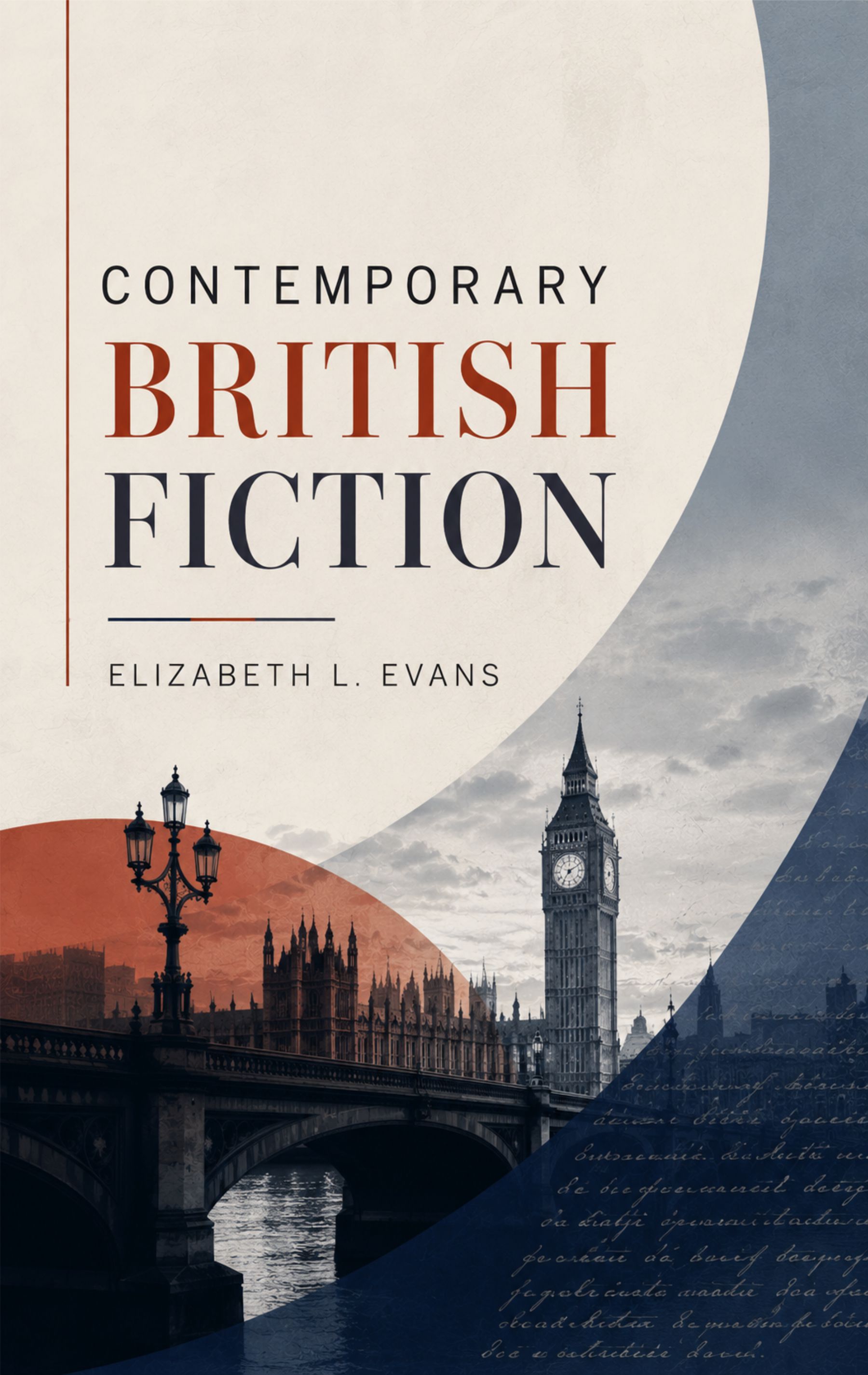
Contemporary British Fiction provides a comprehensive, diachronic, and critical exploration of the British novel. The book bridges the divide between foundational literary history-tracing prose from the 15th century through Victorian and Edwardian eras-and the thematic, cultural complexities of late-20th and 21st-century literature. The landscape of British fiction is a dynamic tapestry woven from centuries of artistic experimentation, socio-political upheaval, and evolving definitions of national identity. While titled Contemporary British Fiction, this volume operates on the premise that the "contemporary" cannot be fully understood without deep excavation of its literary lineage. To comprehend the formal innovations, thematic anxieties, and diverse voices of British writing today, one must trace the long, complex history of the prose tradition that preceded them. This book is uniquely structured into two distinct but deeply conversation-seeking halves. The first section directly interrogates the vital markers of late twentieth and twenty-first-century writing. It examines the tug-of-war between experimental postmodernism and a resilient realism, the rich explosion of multicultural and diaspora voices redefining British ethnicities, and the evolving literary expressions of gender, sexuality, memory, and geographic space. These opening chapters capture a literature actively grappling with a shifting, globalised world. The subsequent and larger portion of the text provides the essential historical counterweight. Beginning in 1485, it guides the reader through the foundational prose of the early modern period, the rise of the novel via Defoe, Richardson, and Fielding, and the ideological battlegrounds of the eighteenth century. It charts the nineteenth-century triumphs of Austen, Dickens, and the Brontës, moving through the industrial city, Victorian provincialism, and Edwardian anxieties.
Elizabeth L. Evans is a critically acclaimed British novelist known for her intricate historical mysteries and sharp psychological fiction. Born in Bath, Somerset, she studied English Literature at the University of Oxford before pursuing a career in fiction writing. Evans is celebrated for her atmospheric prose and meticulously researched settings. Her work frequently explores themes of hidden family secrets, social mobility in Victorian England, and the blurred lines between memory and madness. Critics often compare her narrative tension to Daphne du Maurier and her attention to historical detail to Hilary Mantel. In 2010, Evans received the Iowa Author Award. Other distinctions include a National Endowment for the Arts Fellowship, the James Michener Fellowship, a Lila Wallace Award, the Four Corners Award, and selection of Carter Clay by the Los Angeles Times' Best Books of 1999. Evans has been a fellow at MacDowell Colony, Yaddo Foundation, the International Retreat for Writers at Hawthornden Castle, Centrum Foundation, and Ucross Foundation. Evans resides in a converted lighthouse on the coast of Cornwall with her family and two dogs. She is notoriously private, rarely giving interviews, and prefers to let her intricate novels speak for themselves.
Preface 1. Introduction 2. Narrative Forms: Postmodernism and Realism 3. Writing Contemporary Ethnicities 4. Gender and Sexuality 5. History, Memory and Writing 6. Narratives of Cultural Space 7. Cavaliers, Puritans, and Rogues: English Prose Fiction from 1485 to 1700 8. Defoe and the Contradictions of Englishness 9. Histories of Rebellion: From 1688 to 1793 10. Richardson, Fielding, and Goldsmith 11. The Benevolent Robber: From Fielding to the 1790s 12. Scott, Disraeli, and Others 13. Jane Austen, Charlotte Bronte, and Elizabeth Gaskell 14. Dickens and the Fiction of the City 15. Victorian and Edwardian Fiction: From Vanity Fair to The Secret Agent 16. Puritan and Provincial Englands: From Emily Bronte to D. H. Lawrence 17. From Forster to Orwell: The Novel of England’s Destiny 18. From Kipling to Independence 19. Chivalry and the Twentieth-Century English Novel-Sequence 20. On Englishness and the Twenty-First-Century Novel Bibliography Index

$280.00