
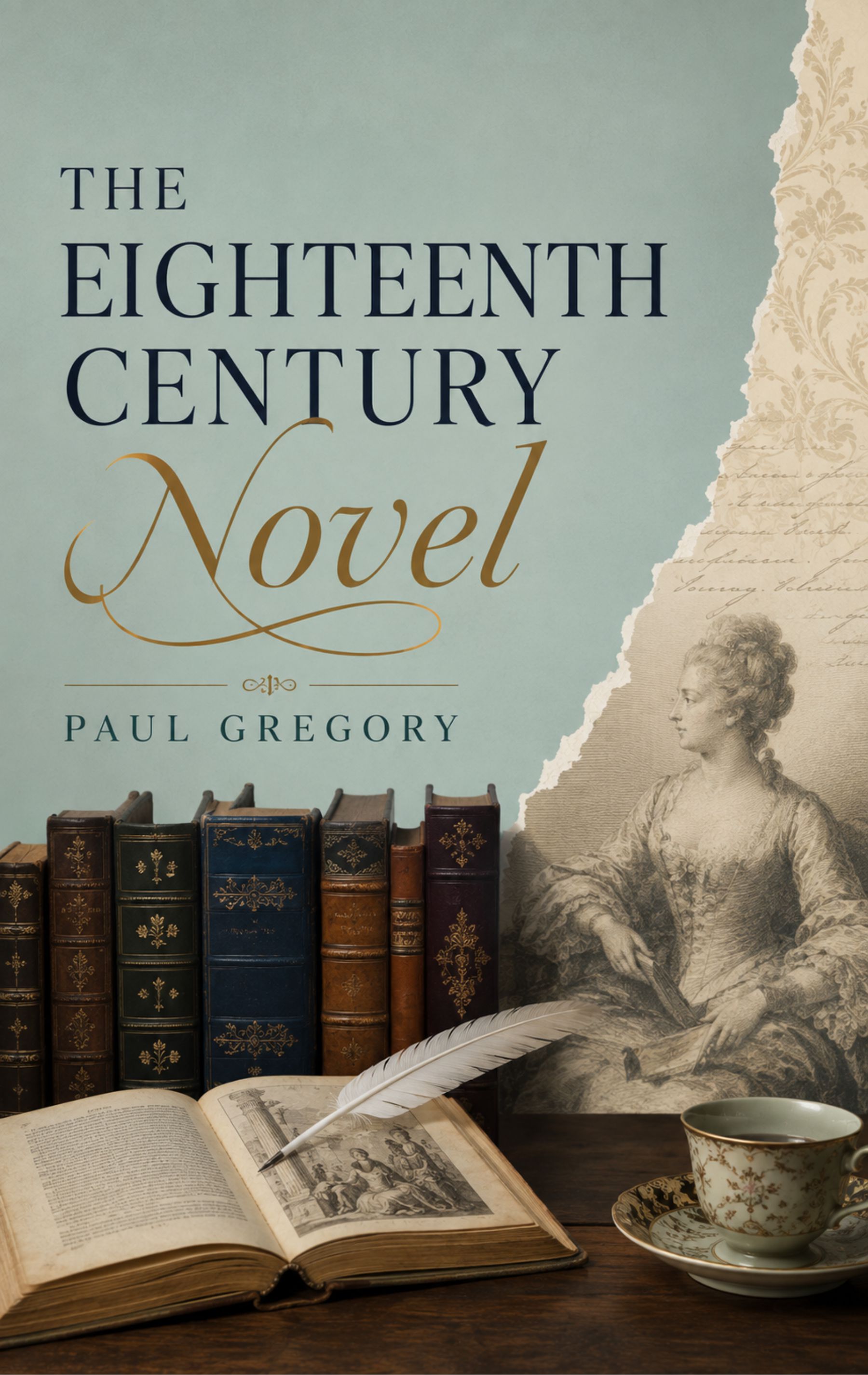
This comprehensive literary guide explores the evolution of the English novel in the 18th century, tracing its journey from early amatory fiction and romances to the complex narrative structures and moral philosophies that defined the era. It provides a detailed analysis of foundational authors and the cultural contexts that shaped their work. This book provides a comprehensive analysis of the 18th-century English novel, tracing its structural, thematic, and ideological evolution. It maps how the genre transitioned from early amatory fiction and social exploration into structured satire, sentimental narratives, and complex historiographical reflections. By balancing canonical male authors with crucial developments in women's writing, the text offers a holistic view of the century's literary transformation. The book introduces the origins of the novel, focusing on the influence of amatory fiction and the revolutionary, society-mapping narratives of Daniel Defoe. It provides in-depth analyses of the period's major male novelists, examining Henry Fielding's system and satire, Tobias Smollett's focus on resentment and action, and Laurence Sterne's experimental prose. A significant portion is dedicated to the vital contributions of female authors who transformed the genre, alongside explorations of sentimental narratives that emphasized philanthropy and shifting views on human suffering. The text closes by bridging the fictional and the historical, examining how historiography, epistemology, and rhetoric shaped the development of 18th-century romances and narrative forms.
Paul Gregory is a distinguished literary scholar and critic specializing in 18th-century British literature. Known for his engaging and analytical approach to the evolution of prose, he has dedicated his career to examining the societal, rhetorical, and structural developments that defined the Georgian literary era. Drawing on his deep expertise in narrative rhetoric, Paul Gregory's work illuminates how early English novelists from Defoe to Austen mirrored and shaped the cultural shifts of their time. His profound understanding of the English novel makes him a sought-after voice in academic discussions regarding how historiography, philosophy, and everyday social reality collided to forge the modern literary genre. In The Eighteenth Century English Novel, Gregory offers a comprehensive re-examination of the genre's formative era. Moving systematically from the foundational rise of amatory fiction and Daniel Defoe's mapping of social totality, he charts the critical transition from passion to suffering. His analytical framework balances major canonical figures providing deep ideological readings of Henry Fielding's satirical systems, Tobias Smollett's narratives of resentment, and Laurence Sterne's stylistic innovations with the transformative impact of eighteenth-century women novelists and romantic traditions. By interrogating the intersections of sentimental narrative, philanthropy, epistemology, and historiography, Gregory reveals how the novel functioned not just as entertainment, but as a vital tool for navigating the rhetoric and realities of a rapidly modernising world.
Preface 1. Introduction 2. Amatory Fiction 3. Defoe: Mapping Social Totality 4. From Passion To Suffering 5. Fielding: System and Satire 6. Smollett: Resentment, Knowledge, and Action 7. Women Novelists and the Transformation of Fiction 8. Sentimental Narrative: Philanthropy and fiction 9. Fielding, Smollett, Sterne 10. Eighteenth Century Romances 11. Epistemology, Rhetoric, and Narrative Bibliography Index

$280.00