
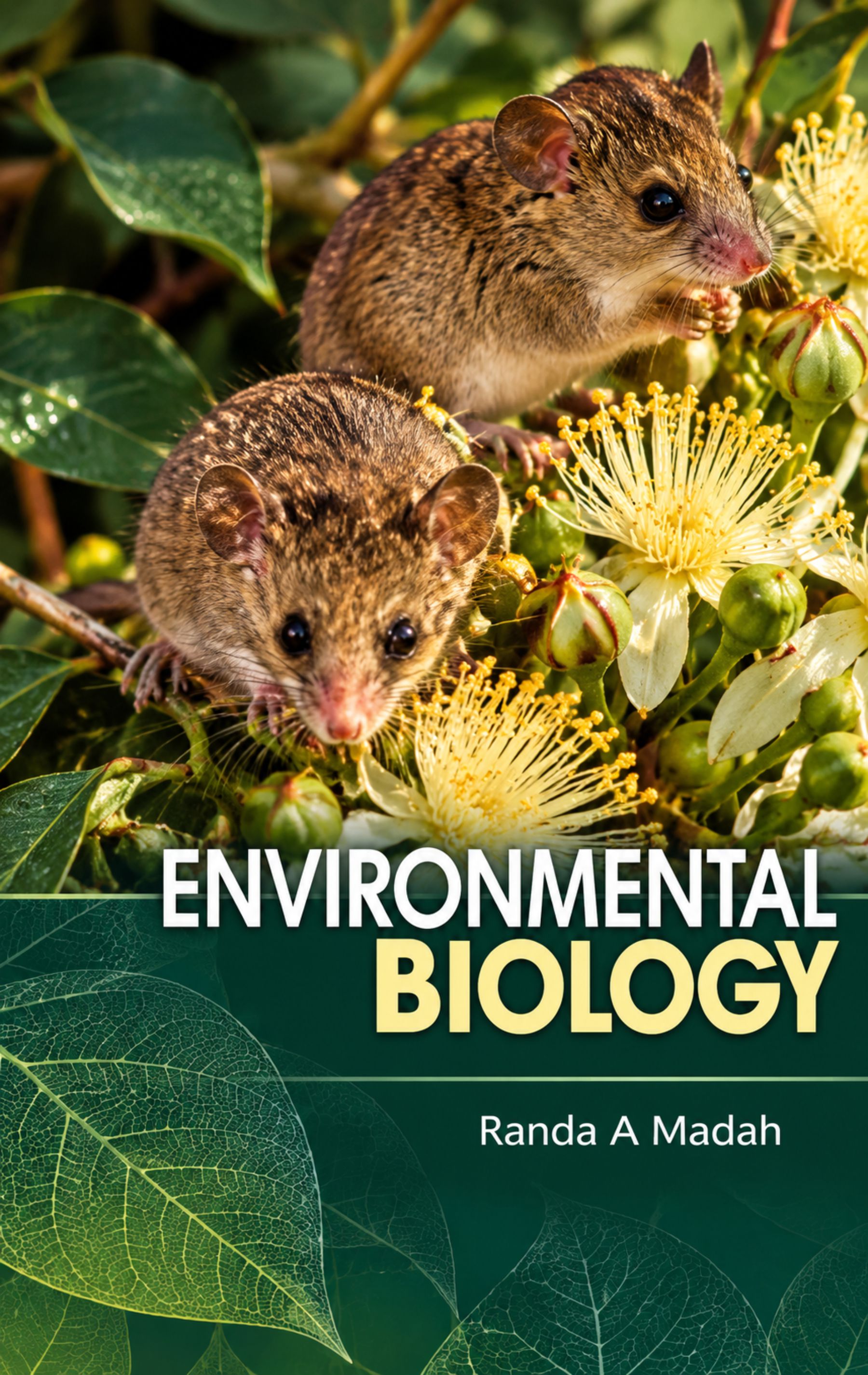
Environmental Biology serves as a definitive roadmap for understanding the complex, interconnected systems that sustain life on Earth. At a time when our planet faces unprecedented ecological challenges, this comprehensive text bridges the gap between foundational biological principles and the urgent environmental realities of the 21st century. It delivers a rigorous yet deeply engaging exploration of how living organisms interact with their physical environments and how human activity alters these vital dynamics. Ecosystem dynamics and energy flow details and breakdowns of nutrient cycles (carbon, nitrogen, phosphorus), food webs, and the thermodynamic principles that govern energy transfer through trophic levels.Biodiversity and conservation isan exploration of global biomes, species richness, evolutionary adaptation, and the critical conservation strategies needed to protect endangered ecosystems.Human impact and global change is anhonest, data-driven assessments of modern ecological crises, including climate change, habitat fragmentation, ocean acidification, and deforesting.Sustainability and resource management isforward-thinking solutions focusing on renewable energy, sustainable agriculture, waste mitigation, and environmental policy frameworks. Packed with up-to-date graphs, satellite imagery, and analytical models that teach readers how to interpret environmental data like modern scientists the text seamlessly integrates biology with geology, chemistry, sociology, and economics, showing that environmental solutions require holistic thinking. This book is custom-tailored for undergraduate biology and environmental science students, as well as educators looking for a structured, evidence-based curriculum. However, its accessible language and compelling narrative style also make it a vital resource for policymakers, environmental advocates, and any conscious citizen looking to deeply understand the mechanics of our changing world.
Dr. Randa A. Madah is a distinguished environmental scientist, academic, and author whose career spans over two decades of transformative research in ecological systems, sustainability, and resource conservation. Renowned for his meticulous synthesis of complex biological data and real-world environmental policy, Dr. AMadah’s work serves as a cornerstone for contemporary ecological education. His comprehensive approach bridges the gap between pure academic theory and the pressing environmental mandates of the 21st century. Dr. AMadah holds an advanced doctorate in Environmental Biology, with localized specialization in natural resource management, ecological resilience, and habitat stewardship. Over the years, his primary research has targeted the critical pathways through which human industry and climate variations disrupt vital ecosystems. In his definitive text, Environmental Biology, Dr. AMadah leverages his extensive fieldwork and research background to unpack the delicate interdependencies between living organisms and their rapidly shifting surroundings. Unlike traditional ecology texts that emphasize isolated species interactions, his work places a targeted emphasis on human impact, resource stewardship, and adaptive conservation strategies. Through an analytical lens, the text addresses modern ecological crises—including global warming, habitat fragmentation, and industrial pollution—providing undergraduate students, conservation activists, and policymakers with the conceptual frameworks required to design long-term sustainability transitions.Beyond his literary contributions, Dr. AMadah acts as a core consultant to international environmental boards and academic steering groups. He has frequently spear-headed empirical research initiatives aimed at solving localized societal and environmental crises, advocating for strong conservation ethics across public education platforms.
Preface 1.ENVIRONMENTAL SCIENCE 1.1 The Earth, Humans, & the Environment 1.2 The Process of Science 1.3 Environment & Sustainability 1.4 Environmental Ethics 1.5 Environmental Justice & Indigenous Struggles 1.6 Conclusion 2.MATTER, ENERGY, & LIFE 2.1 Matter 2.2 Energy 2.3 A Cell is the Smallest Unit of Life 2.4 Energy Enters Ecosystems Through Photosynthesis 2.5 Conclusion 3.ECOSYSTEMS AND THE BIOSPHERE 3.1 Energy Flow through Ecosystems 3.2 Biogeochemical Cycles 3.3 Terrestrial Biomes 3.4 Aquatic Biomes 3.5 Conclusion 4.COMMUNITY & POPULATION ECOLOGY 4.1 Population Demographics & Dynamics 4.2 Population Growth and Regulation 4.3 The Human Population 4.4 Community Ecology 4.5 Conclusion 5.CONSERVATION & BIODIVERSITY 5.1 Introduction to Biodiversity 5.2 Origin of Biodiversity 5.3 Importance of Biodiversity 5.4 Threats to Biodiversity 5.5 Preserving Biodiversity 5.6 Conclusion 6.ENVIRONMENTAL HAZARDS & HUMAN HEALTH 6.1 The Impacts of Environmental Conditions 6.2 Environmental Health 6.3 Environmental Toxicology 6.4 Bioremediation 6.5 The Love Canal Disaster 6.6 Conclusion 7.WATER AVAILABILITY AND USE 7.1 Water Cycle and Fresh Water Supply 7.2 Water Supply Problems and Solutions 7.3 Water Pollution 7.4 Water Treatment 7.5 The Aral Sea - Going, Going, Gone 7.6 Conclusion 8.FOOD & HUNGER 8.1 Food Security 8.2 Biotechnology and Genetic Engineering 8.3 Conclusion 9.CONVENTIONAL & SUSTAINABLE AGRICULTURE 9.1 Soil Profiles & Processes 9.2 Soil-Plant Interactions 9.3 Conventional Agriculture 9.4 Pests & Pesticides 9.5 Sustainable Agriculture 9.6 Conclusion 10.AIR POLLUTION, CLIMATE CHANGE, & OZONE DEPLETION 10.1 Atmospheric Pollution 10.2 Ozone Depletion 10.3 Acid Rain 10.4 Global Climate Change 10.5 Conclusion 11.CONVENTIONAL & SUSTAINABLE ENERGY 11.1 Challenges and Impacts of Energy Use 11.2 Non-Renewable Energy Sources 11.3 Renewable Energy Sources BIBLIOGRAPHY INDEX

$280.00