
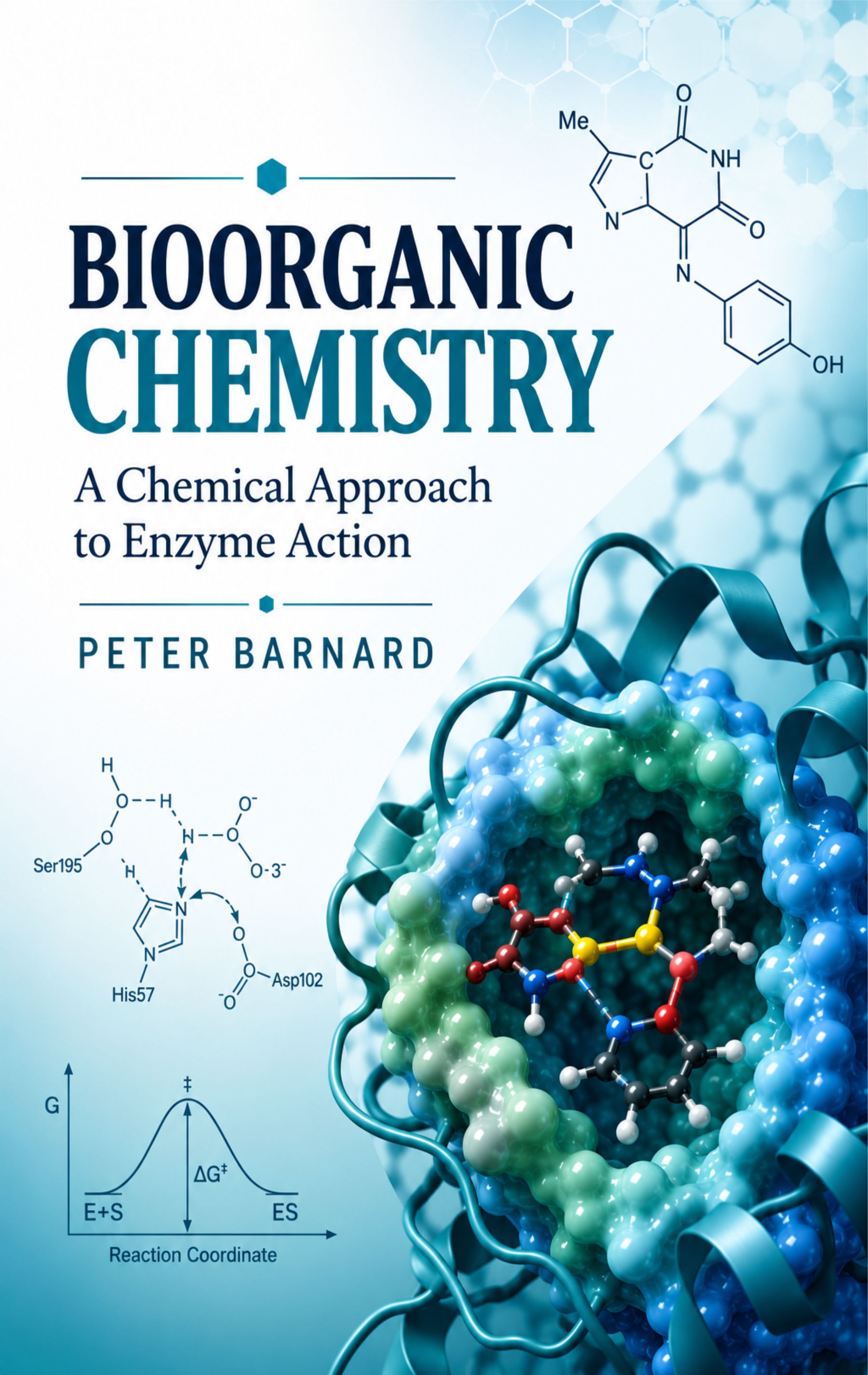
Bioorganic Chemistry: A Chemical Approach to Enzyme Action stands as a denitive, masterfully crafted cornerstone in the landscape of chemical biology, bridging the traditionally separate realms of organic synthesis and molecular biology. At its heart, the book operates on a brilliant pedagogical premise: to understand how life works at a molecular level, one must understand the organic reaction mechanisms driving biological macromolecular architecture. It takes readers on a systematic journey from the foundational properties of fundamental biopolymers to the complex structural environments of enzyme active sites. The text meticulously deconstructs the chemical behavior of amino acids, polypeptides, phosphate groups, and polynucleotides, uncovering how spatial proximity, molecular adaptation, and electrostatic forces work in unison to orchestrate cellular life. By comparing and contrasting synthetic chemical processes with biological synthesis, the book builds a deep relational framework that helps advanced undergraduates, graduate students, and industry researchers transcend simple memorization in favor of intuitive chemical logic For anyone seeking to master the conceptual borderline where chemistry meets biology, Bioorganic Chemistry: A Chemical Approach to Enzyme Action is not merely an optional book-it is an essential intellectual blueprint. It equips the reader with the analytical tools necessary to dissect nature's most sophisticated molecular machines, turning the study of enzyme action intoan actionable roadmap for synthetic innovation and chemical design.
Peter Barnard is a distinguished scientist and educator with an extensive background in bridging the elds of organic chemistry and molecular biology. He holds a Ph.D. in Organic Chemistry, specializing in biomimetic synthesis and enzymatic reaction mechanisms. His research career has focused heavily on creating synthetic models that mimic the catalytic efciency of natural enzymes, providing fundamental insights into the chemical principles governing biological systems. As an active member of the international chemical biology community, Dr. Barnard has spent decades teaching advanced biochemistry and organic chemistry courses at leading academic institutions. He has published numerous peer-reviewed papers on transition-state analogs, enzyme inhibitors, and molecular recognition.His deep academic qualications and hands-on laboratory expertise uniquely position him to write Bioorganic Chemistry: A Chemical Approach to Enzyme Action. In this book, Dr. Barnard expertly translates complex structural biology into intuitive organic mechanisms, making it an indispensable resource for students and researchers looking to understand life at the molecular level.
Preface 1. INTRODUCTION TO BIOORGANIC CHEMISTRY Basic Considerations Proximity Effects in Organic Chemistry Molecular Adaptation 2. BIOCHEMISTRY FUNDAMENTALS Introduction Proteins Nucleic Acids Zinc-Finger Proteins Summary And Conclusions 3. INSTRUMENTAL METHODS Introduction X-Ray Absorption Spectroscopy (Xas) And Extended X-Ray Absorption Fine Structure (Exafs) X-Ray Crystallography Nuclear Magnetic Resonance Electron Paramagnetic Resonance Summary And Conclusions 4. COMPUTER HARDWARE, SOFTWARE, AND COMPUTATIONAL CHEMISTRY METHODS Introduction To Computer-Based Methods Computer Hardware Molecular Modeling And Molecular Mechanics Quantum Mechanics-Based Computational Methods Computer Software For Chemistry World Wide Web Online Resources Summary And Conclusions 5. ENZYME MODELS Host-Guest Complexation Chemistry Micelles Polymers Cyclodextrins Enzyme Design Using Steroid Template Remote Functionalization Reaction Biomimetic Polygene Cyclization 6. METAL IONS Metal Ions In Proteins And Biological Molecules Carboxypeptidase A And The Role Of Zinc Hydrolysis Of Amino Acid Esters And Amides And Peptides Iron And Oxygen Transport Copper Ion Cobalt And Vitamin B12 Action Oxidoreduction 7. COENZYME CHEMISTRY Pyridoxal Phosphate 7.3 .Thiamine 7.4 .Biotin Bibliography Index

$280.00